Case Study: Piper’s Place Embraces a Site-specific Aesthetic

A San Juan Island home designed to embrace the Pacific Northwest climate with authentic yakisugi “shou sugi ban” siding.

Set on a hillside above the Salish Sea, Piper’s Place is a study in living with the elements. Designed by architect John Stoeck and finished with Gendai® Alkyd Black yakisugi siding, this island home celebrates the beauty of exposure. From the sweeping views to the charred wood that softens over time, every detail reflects an intentional balance between protection and openness—where the site’s unique weather becomes part of the architecture itself.

An Island Home that's Built for the Climate

Image of the Salish Sea as seen from Piper's Place
We noticed a rise in the number of houses using Nakamoto Forestry products across the islands of the Pacific Northwest. In September 2025, our team took the opportunity to visit Orcas Island off the coast of Washington State, hoping to better understand this trend and also to hear from homeowners about their experiences with our wood. The largest and perhaps most rugged of the San Juan Islands, horseshoe-shaped Orcas Island totals about 57 square miles with a population of about 4,900 residents. Known as the “gem of the San Juans,” it is a popular destination for all sorts of outdoor enthusiasts. The island typically experiences long but mild and wet winters plus short but warm and dry summers.

Design Intent: Living in the Weather

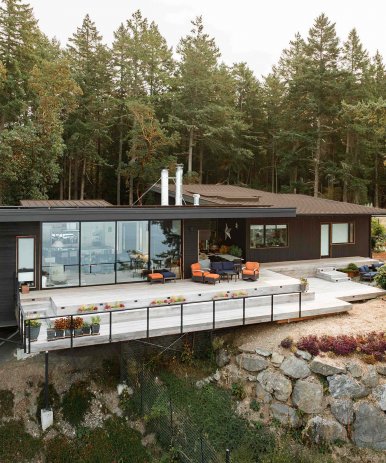
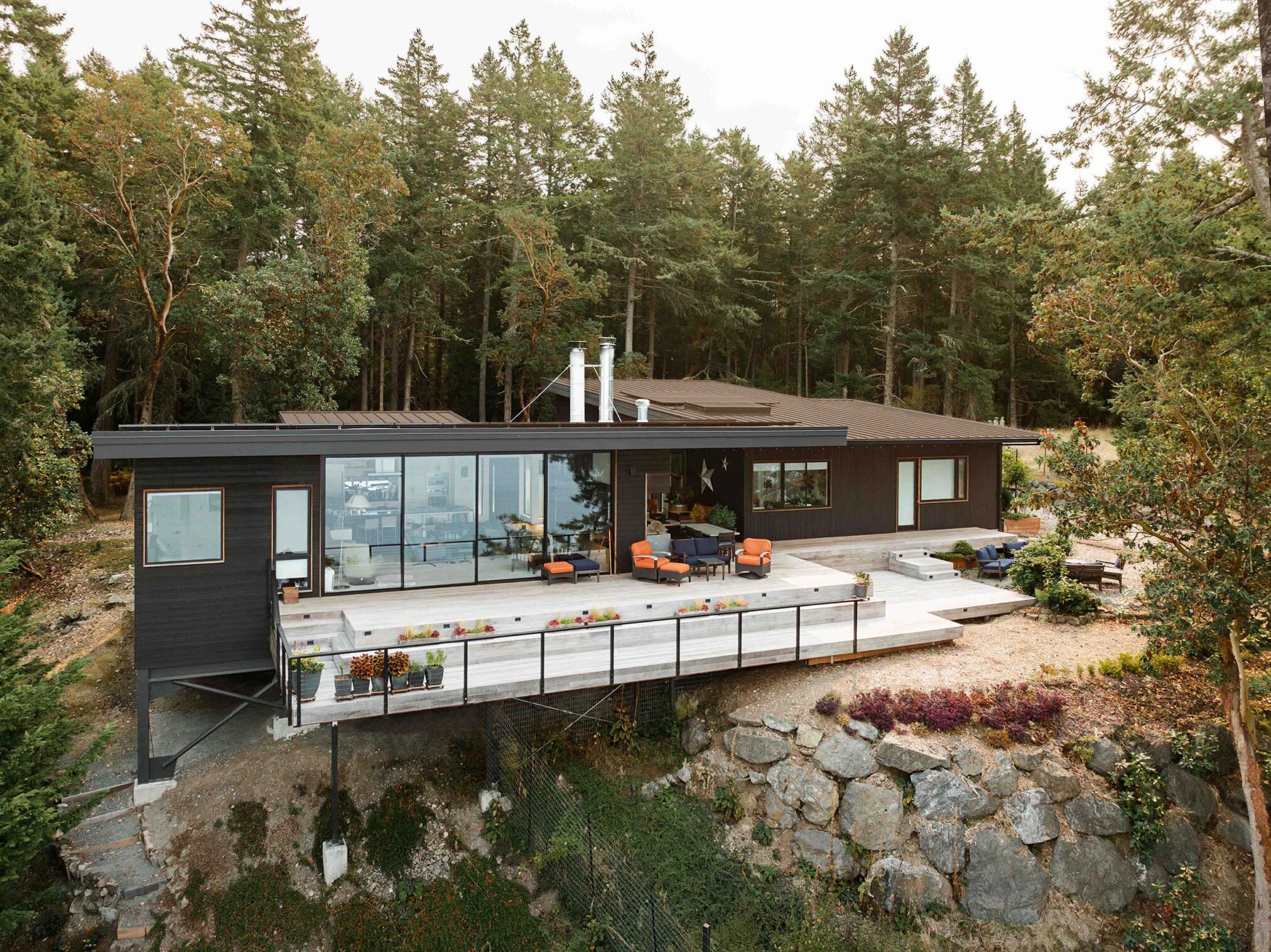
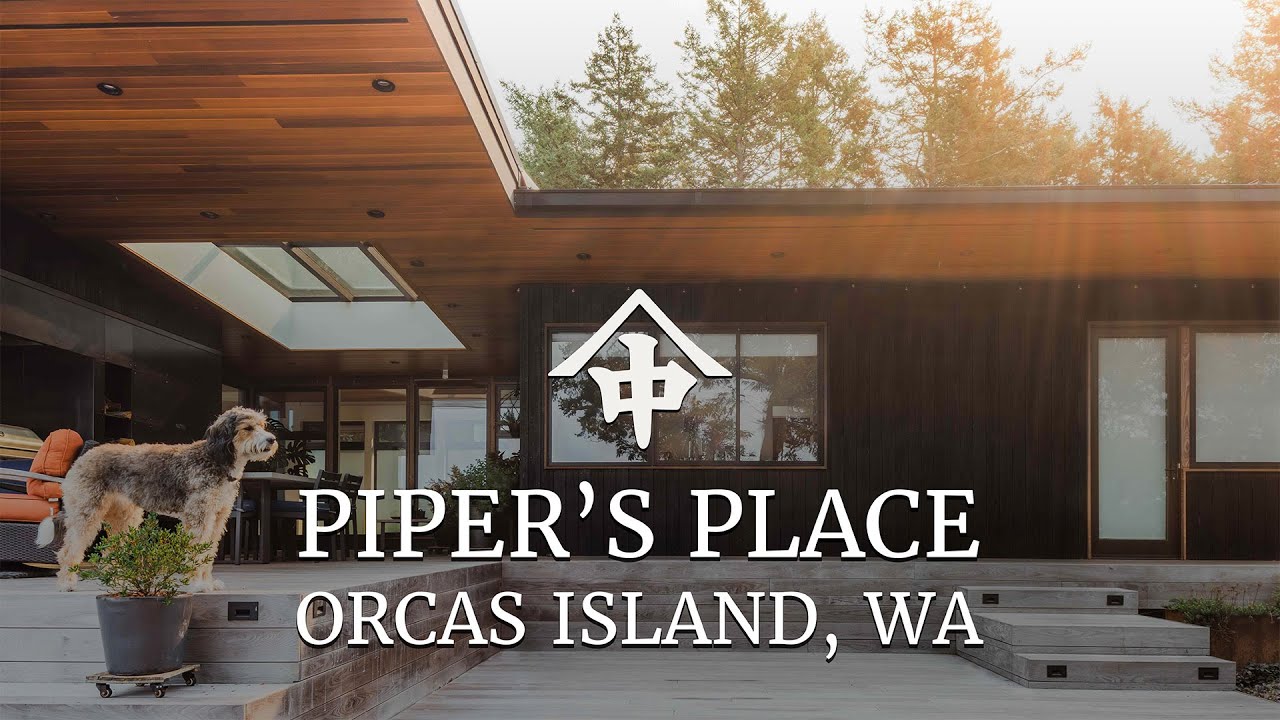
Landscape image of Piper's Place featuring Gendai® Alkyd Black on Orcas Island, WA
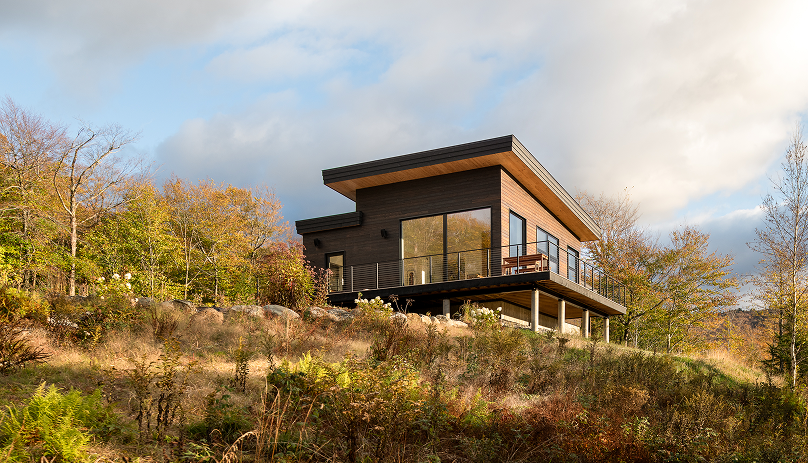
Set against the coastal breeze of the Salish Sea, Piper’s Place stands atop a hill with a quiet presence, a flat metal roof, and black yakisugi siding. The house was designed by John Stoeck, principal and founder of Regeneration Design. His work philosophy combines client-centered designs with site-specific architecture.
 

Built in 2020, the home layouts were chosen to provide a sweeping vista from the owner’s daily living area. A covered outdoor room and carefully oriented glass walls blur the boundaries between inside and outside, offering protection from the elements while maintaining an immersive view.

This perspective allows the homeowners to experience weather as it rolls through the landscape, letting them feel immersed rather than merely observing. “Anything we could do to stay out of the rain and stay warm for longer on those shoulder seasons was really important,” says homeowner Lee LeFeever.

We knew from the beginning that it would weather, and we saw that as part of the character of the home

Grace in Imperfection

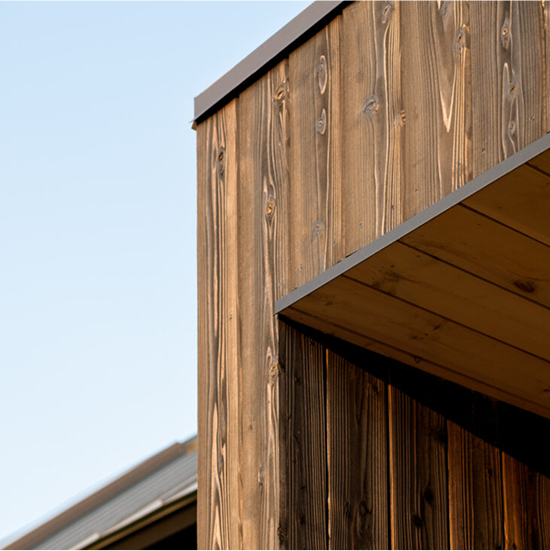
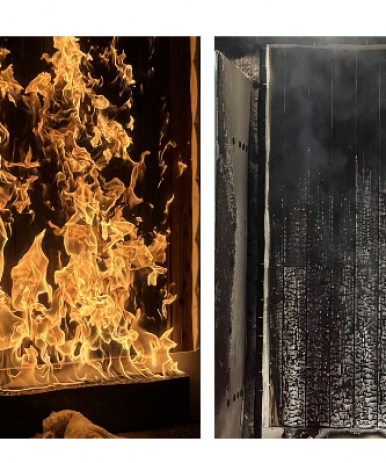
While the homeowner’s desire to have a Japanese-Scandinavian design played the main role in their decision to use authentic yakisugi siding, the protection offered by professionally charred wood provided another reason for the selection — given that the area is a potential wildfire zone. As the owner notes,

“It’s not something that’s supposed to look like burned wood. It actually is charred cedar. That truth in materials was something we both liked.”

Another factor was the homeowners’ connection to Japanese culture. Rather than maintaining a flawless façade, the couple embraced the idea that time and exposure would change the way the house looks—just as cedar decks naturally turn silver and metals take on a patina.

They explain, “We knew from the beginning that it would weather, and we saw that as part of the character of the home.”

This approach reflects the wabi-sabi appreciation for imperfection and a concept rooted deeply in traditional Japanese design and culture.

Piper’s Place stands as a reflection of timeless values, authentic materials, respect for craftsmanship, and a relationship with nature.

Watch homeowner Lee LeFever share his experience in our interview, or explore the full project story and gallery on the Piper’s Place portfolio page.
YouTube player

Learn more useful tips for yakisugi installation and maintenance on our YouTube channel

Putting it All Together

It is challenging to specialize in natural building materials since they are more inconsistent than engineered materials. Every single tree will have wood with different density, grain, and color characteristics. Each stick of wood from that tree will be primarily heartwood at one end and sapwood at the other. This makes the sampling process incredibly challenging. Small samples rarely paint a full visual picture of the product spanning an entire wall. Engineered materials are processed and more visually consistent, but they are not as beautiful or wholesome as natural materials.

Color and tone variation in our natural wood products is one of their most desirable characteristics, but it’s also a subject most people have a lot of questions about. We hope that by sharing our knowledge of how wood anatomy factors into the unique appearance of each final product it will help garner greater appreciation for the beauty and visual play of wood products across the board. The most important thing to remember is that change over time is considered beautiful with natural materials. For those who prefer a uniform siding that will stay the same color throughout its lifetime, painted wood products are probably a better fit. However, if beauty and natural textures are your drivers in choosing a cladding then natural wood siding can’t be beat.

Knowledge

Find everything you need to know about our products—from FAQs, to finish coating options, to manuals and technical documentation

Shou Sugi Ban, Technical
Shou Sugi Ban, Science & Sustainability

Find Your Match

Answer a few quick questions, and our experts will provide personalized recommendations tailored to your style, needs, and project requirements.

Modern House on hill with yakisugi siding