



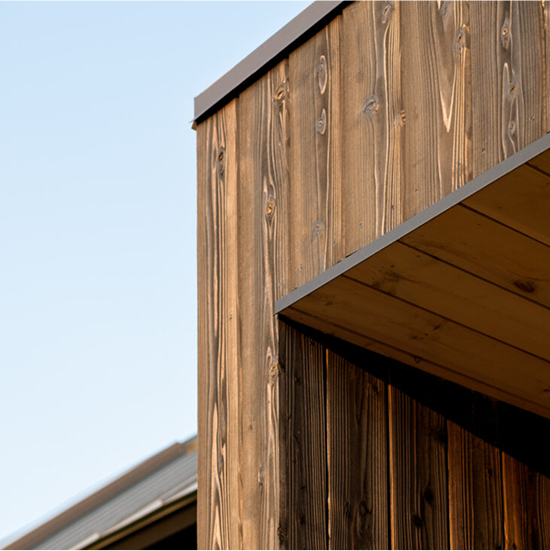


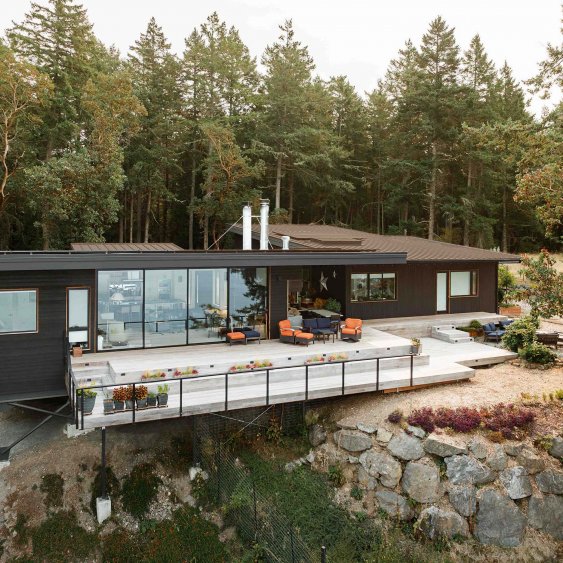
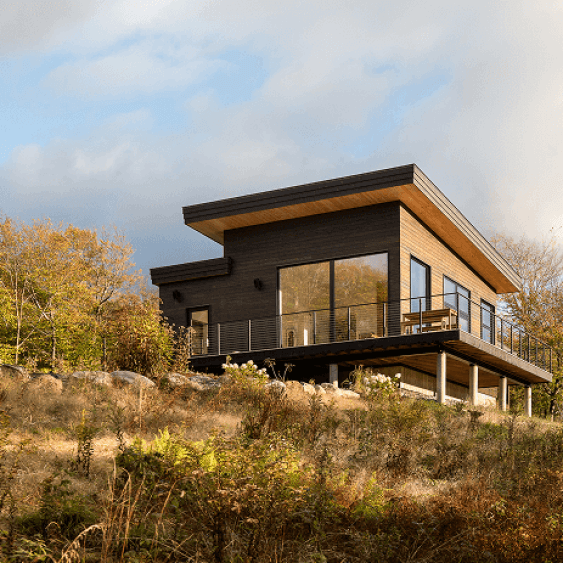
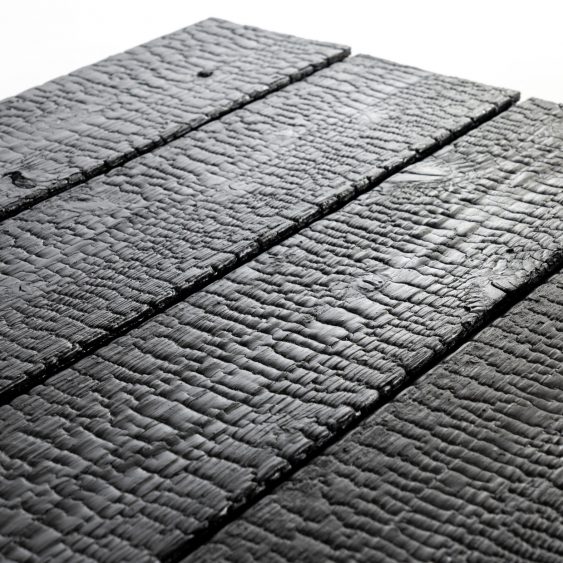
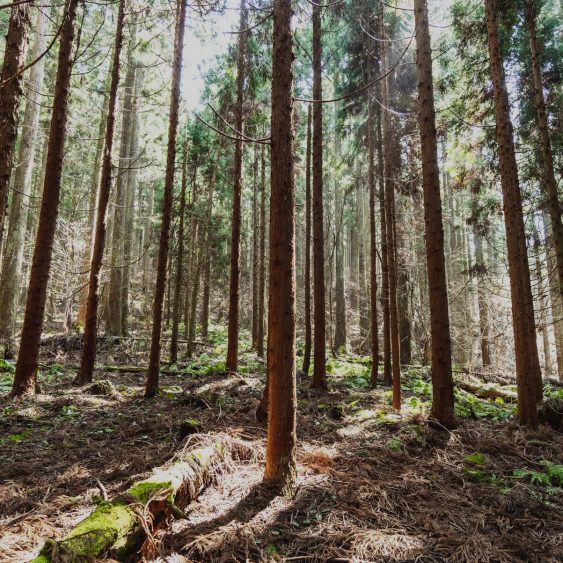
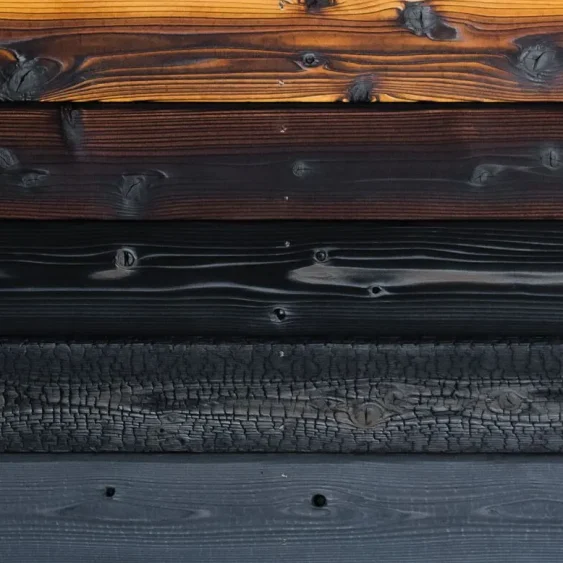
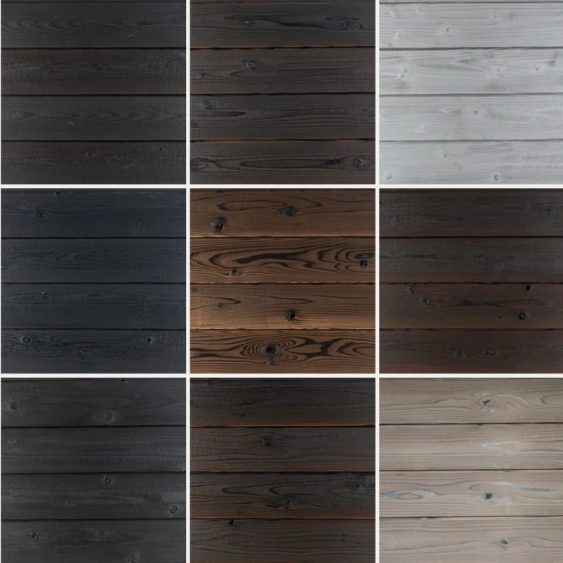
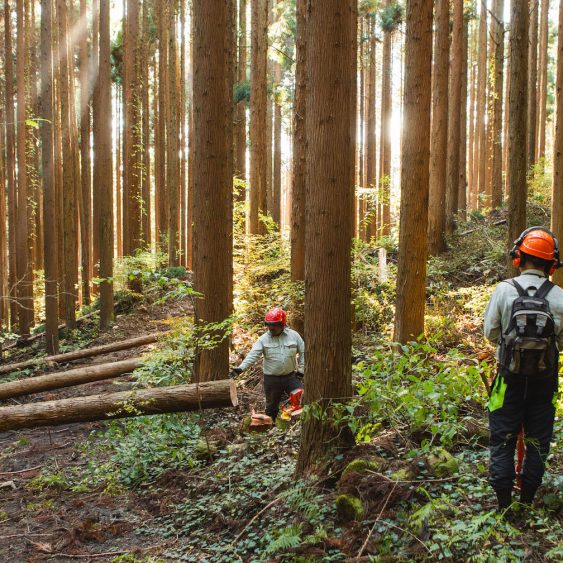


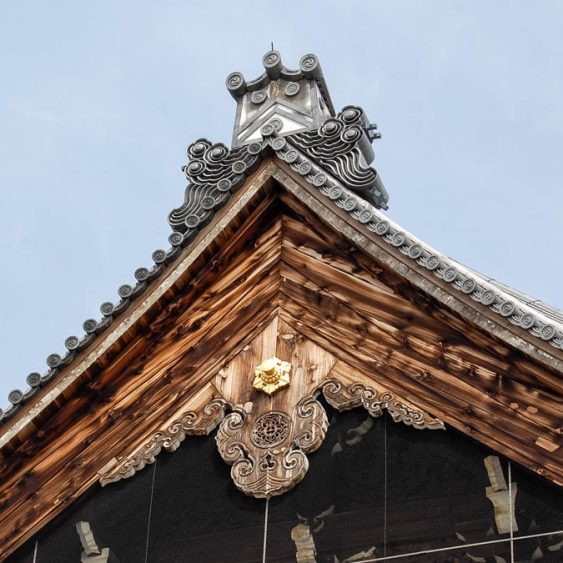

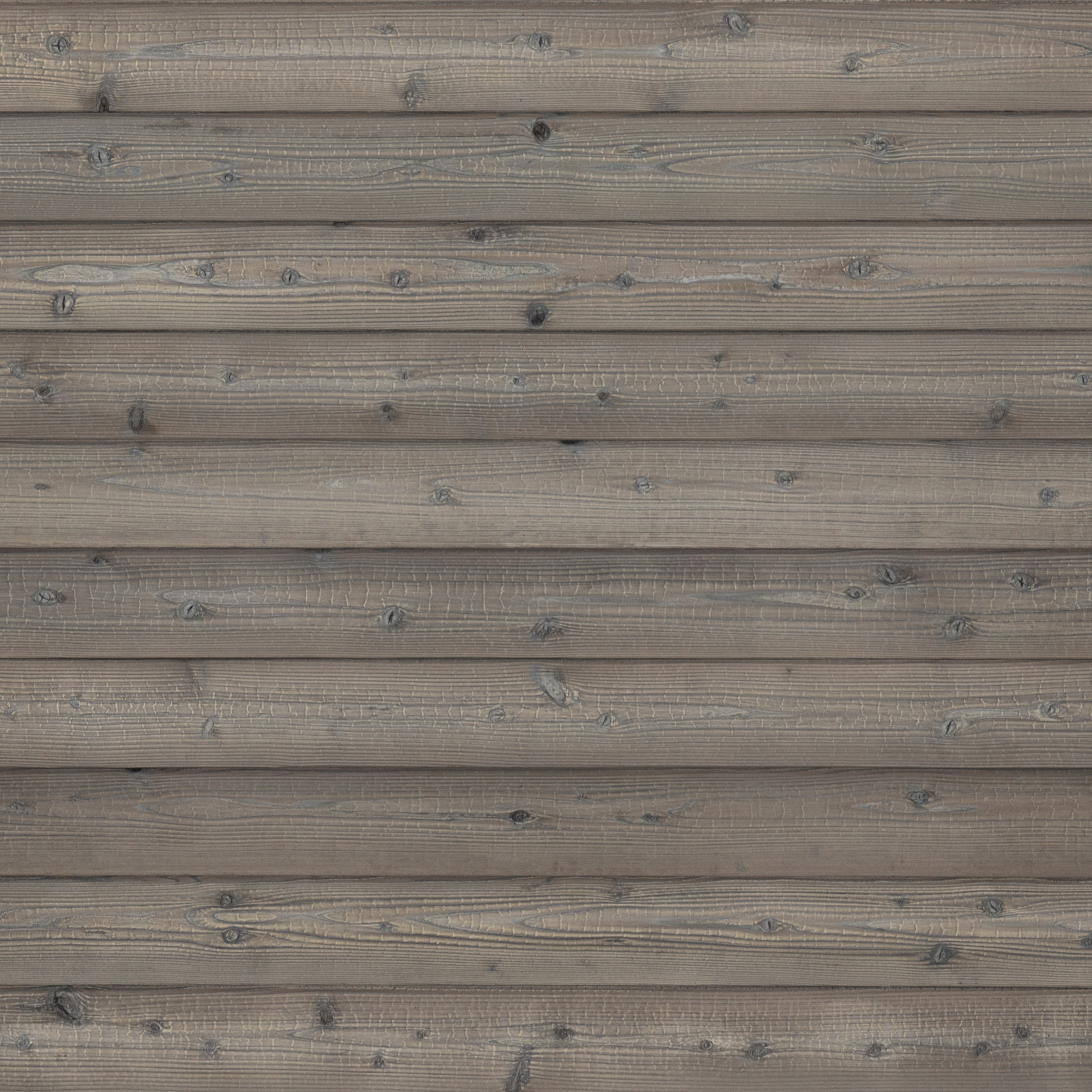
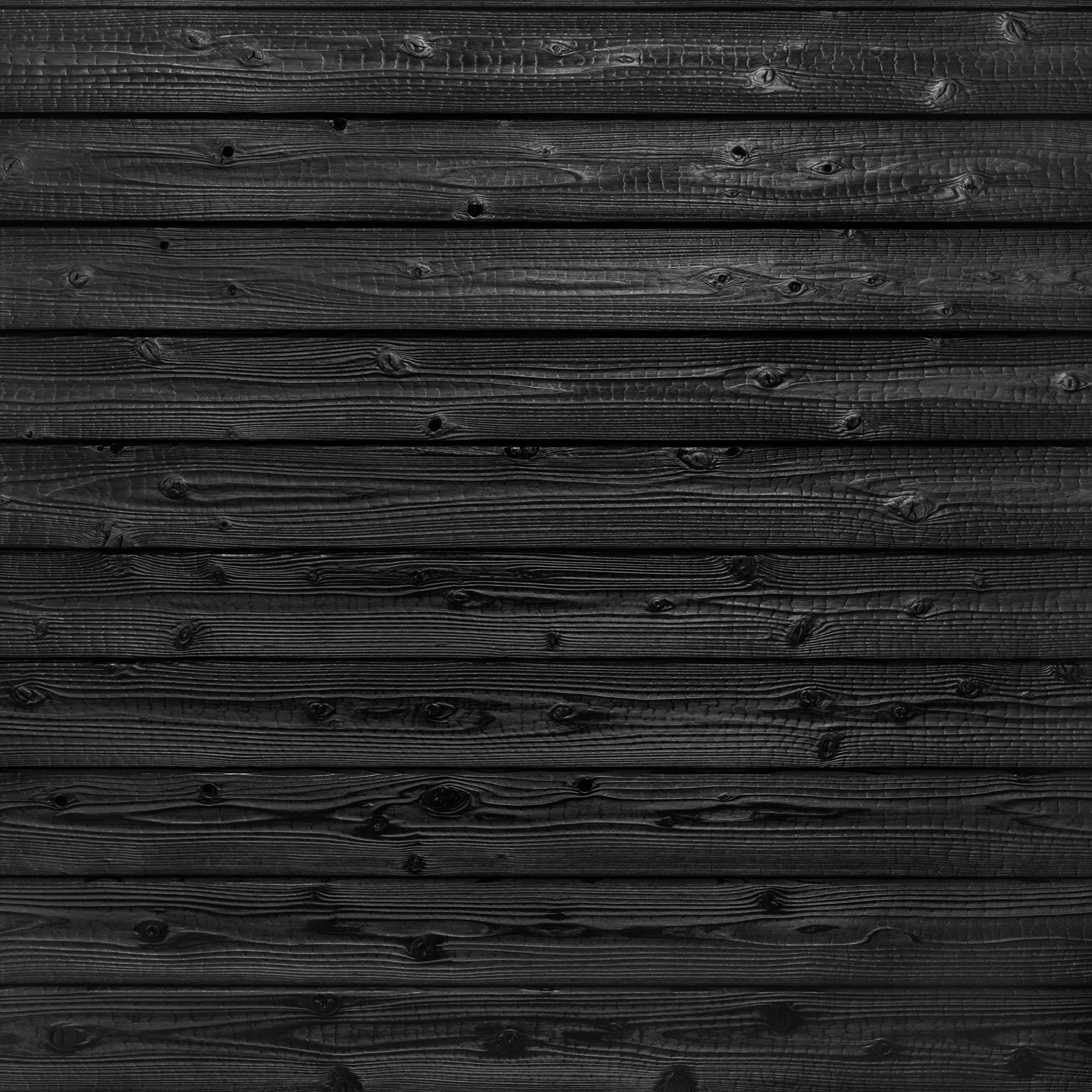
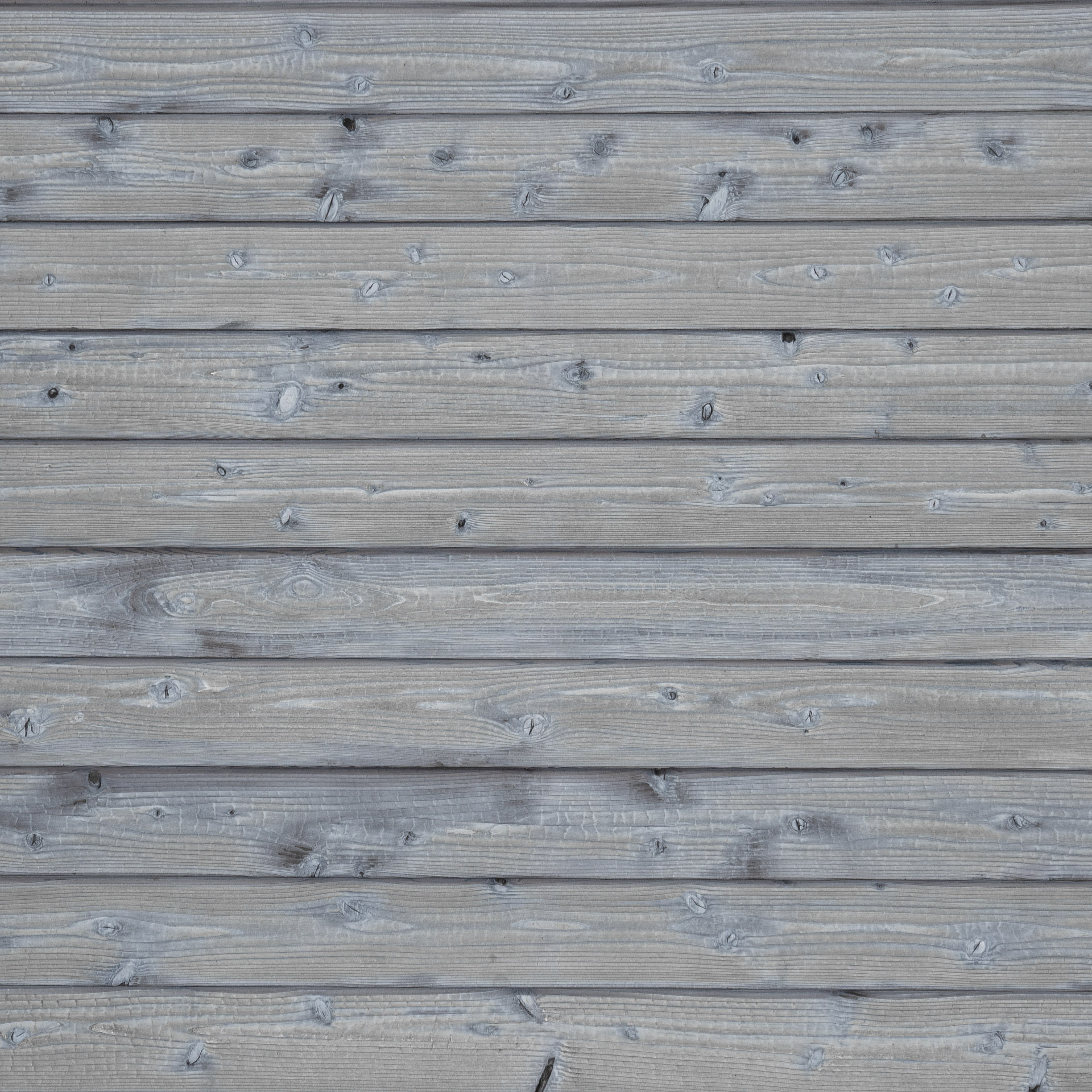
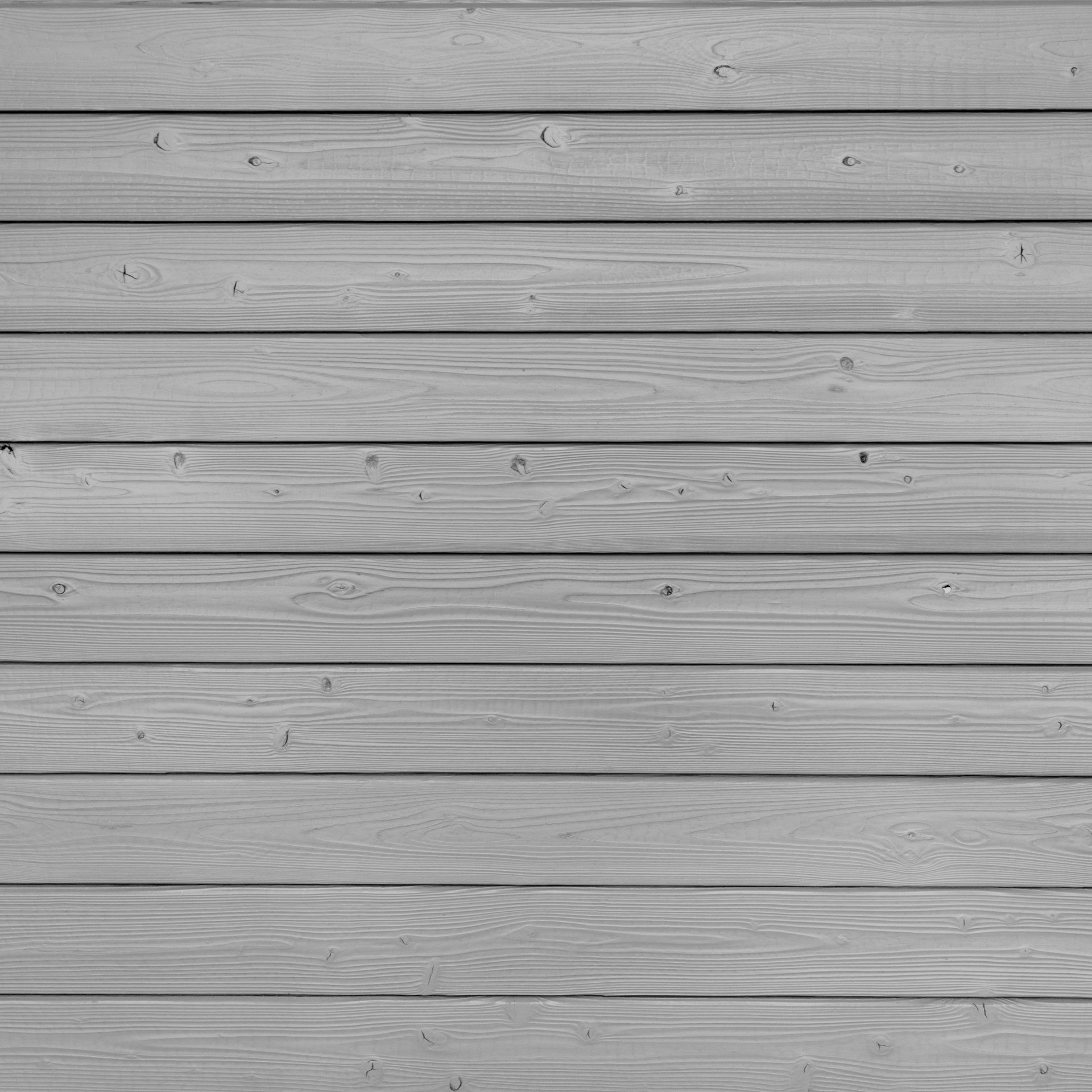
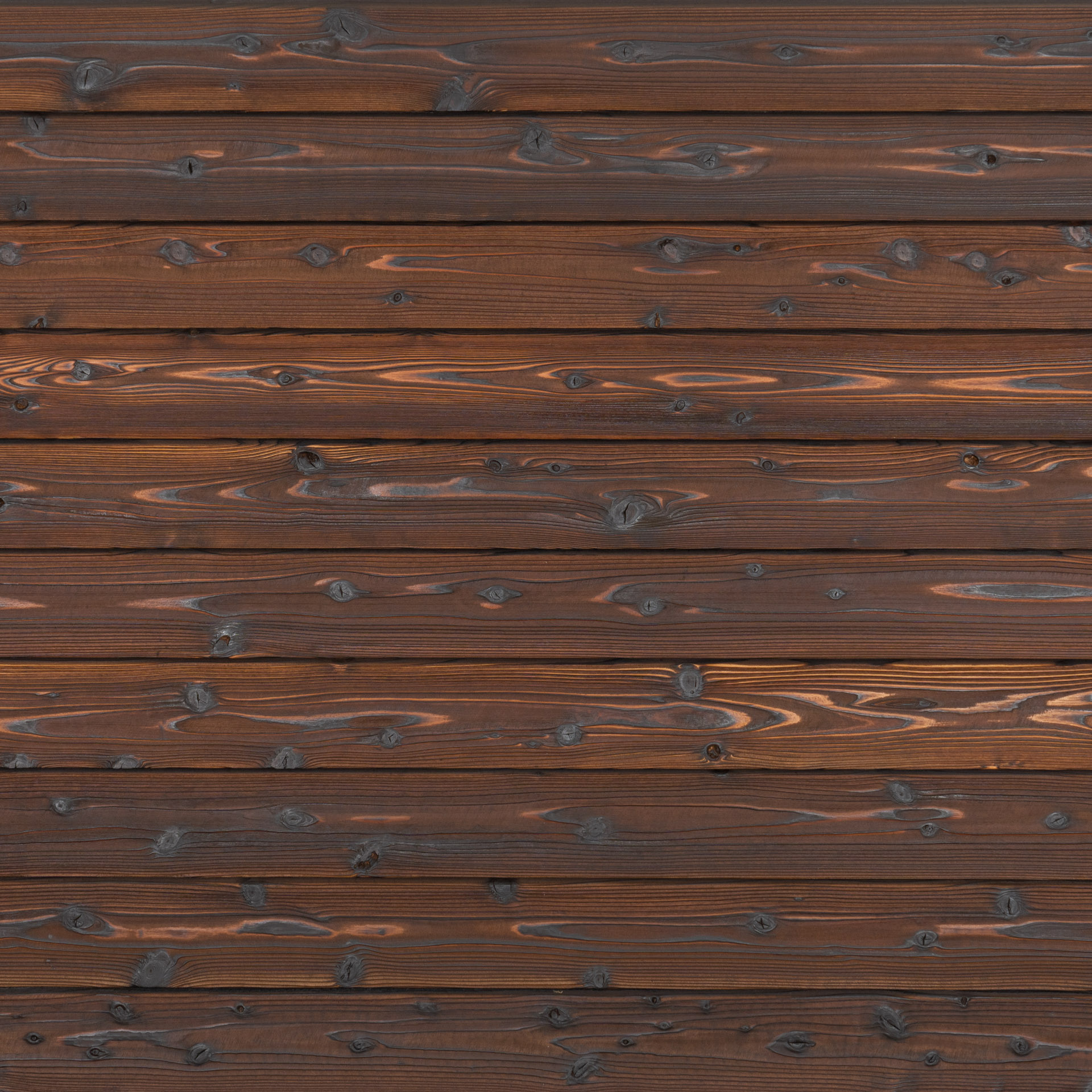
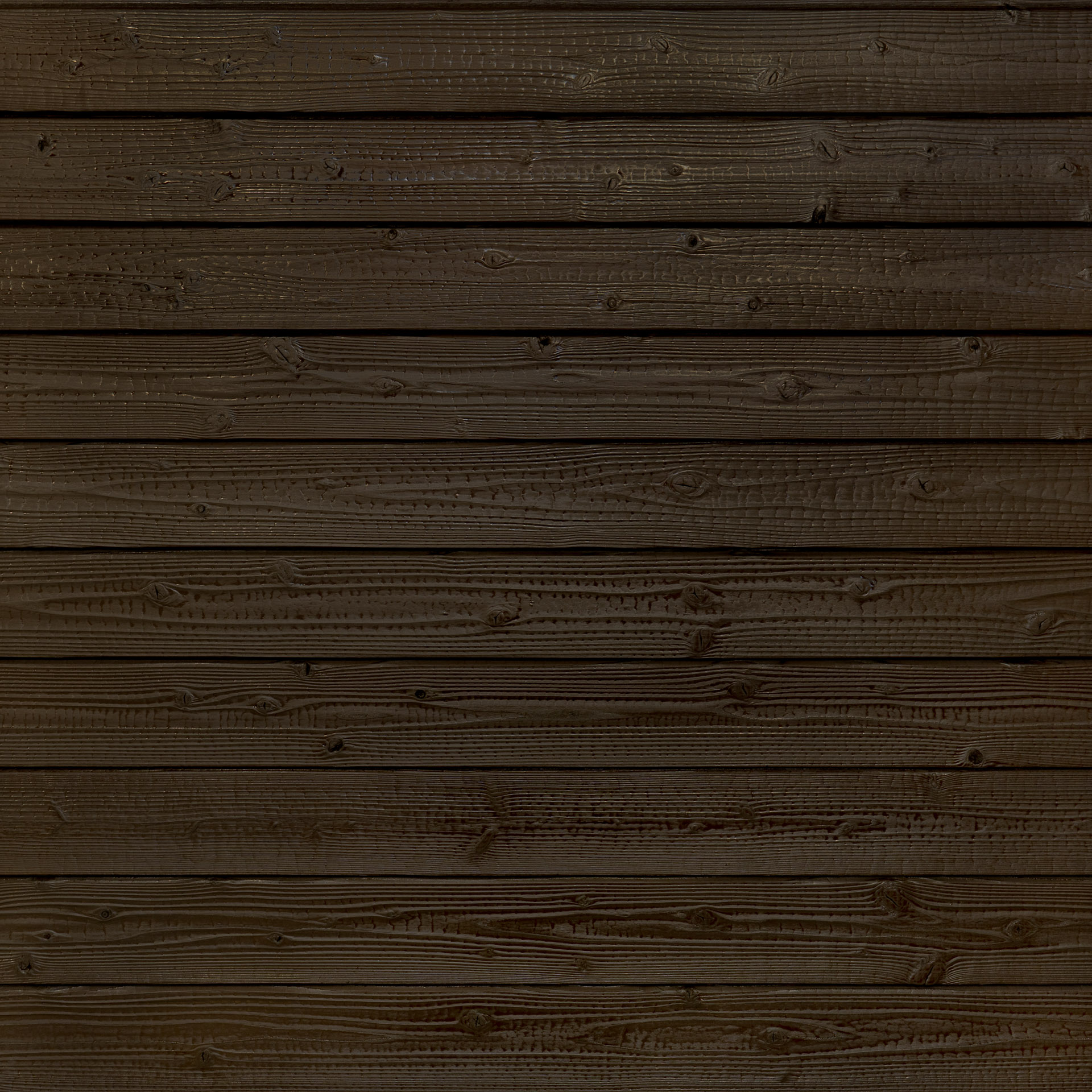

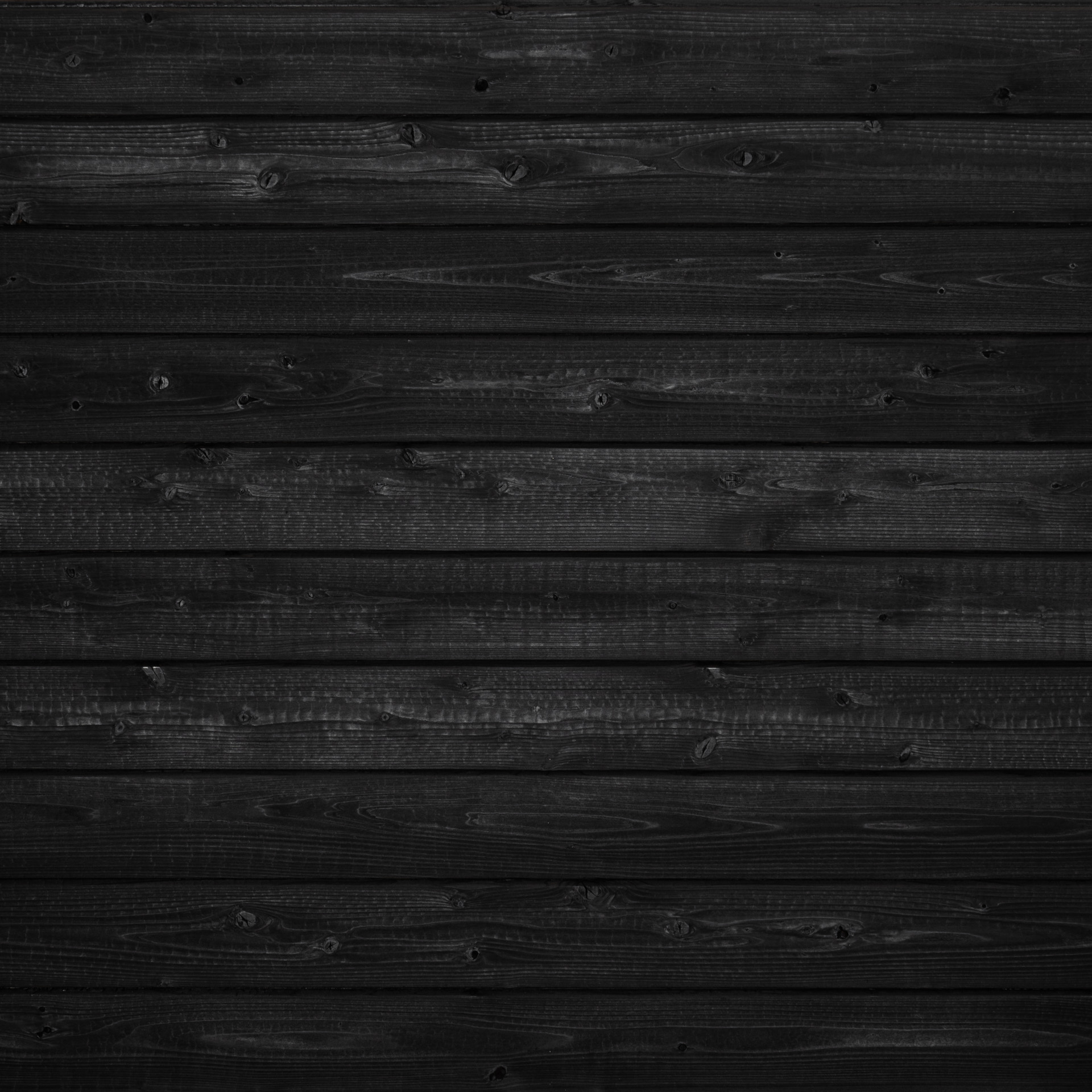
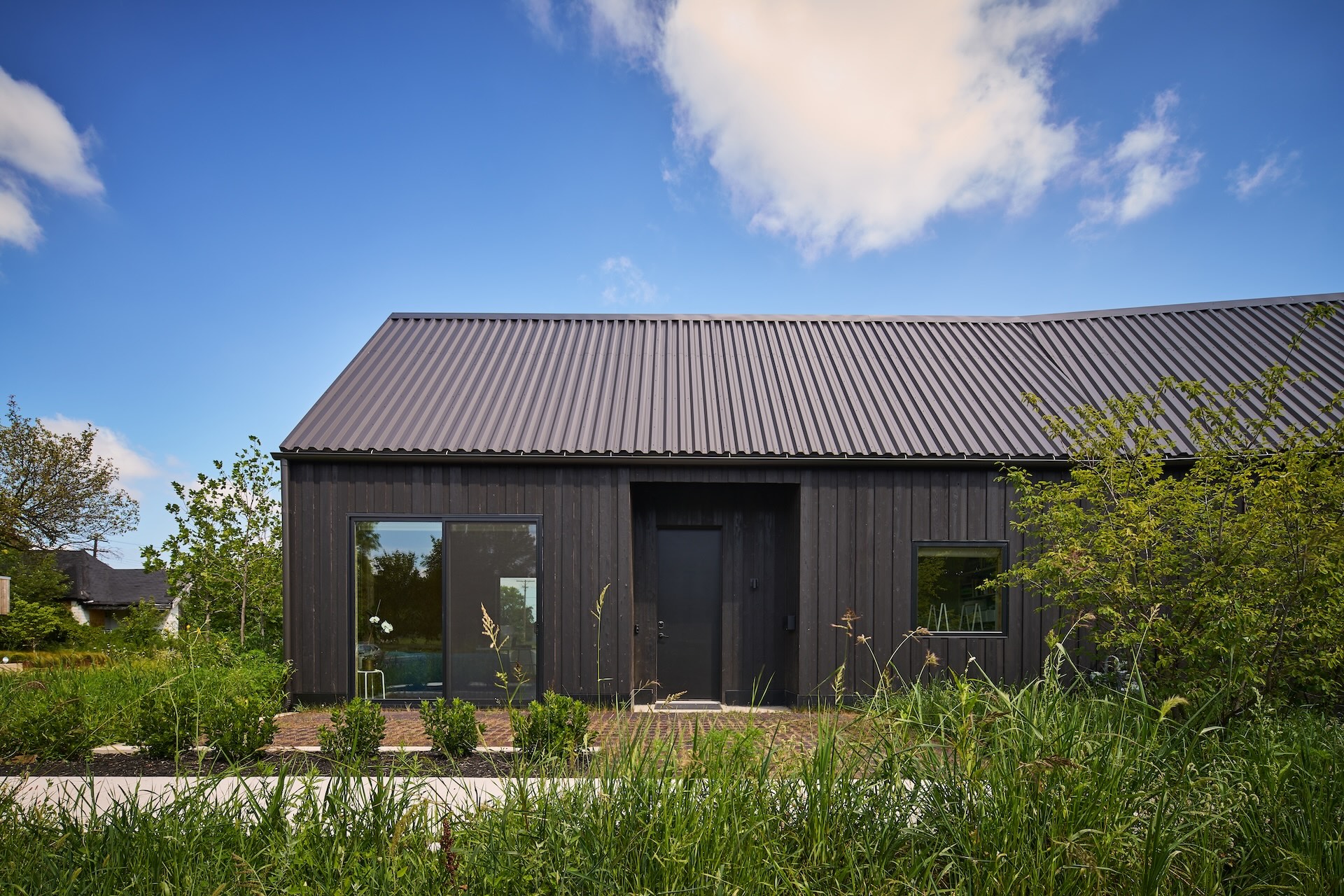
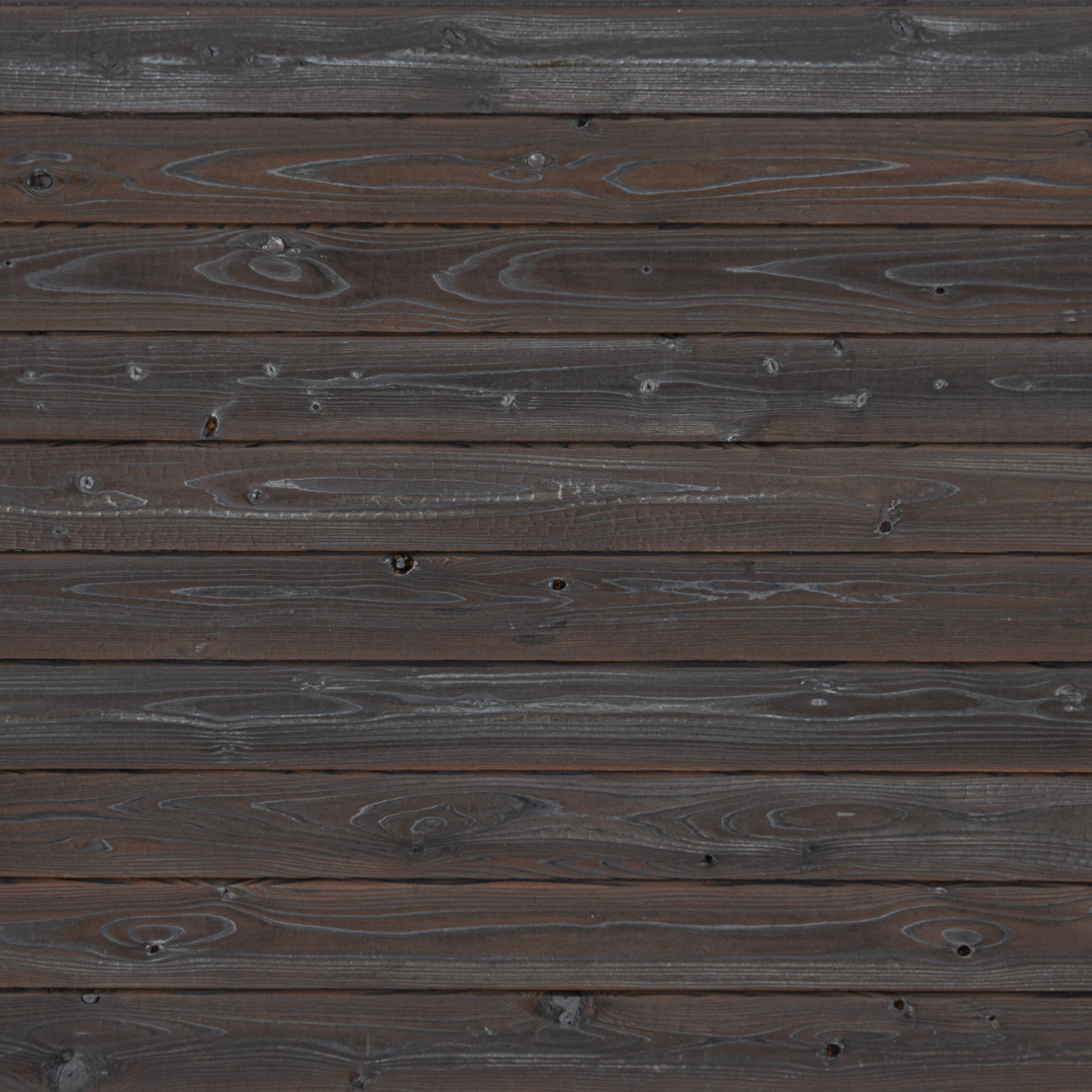


Sugi

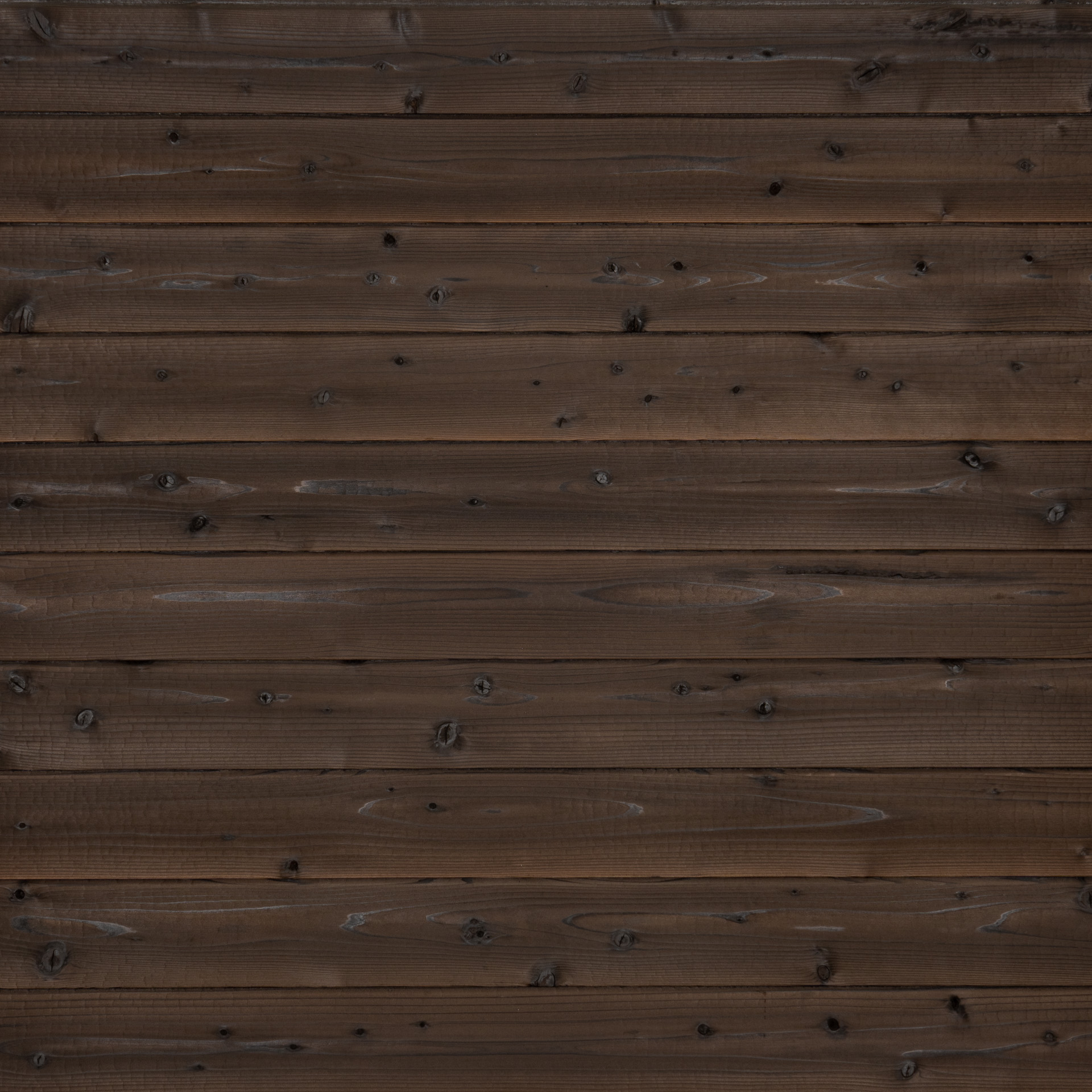
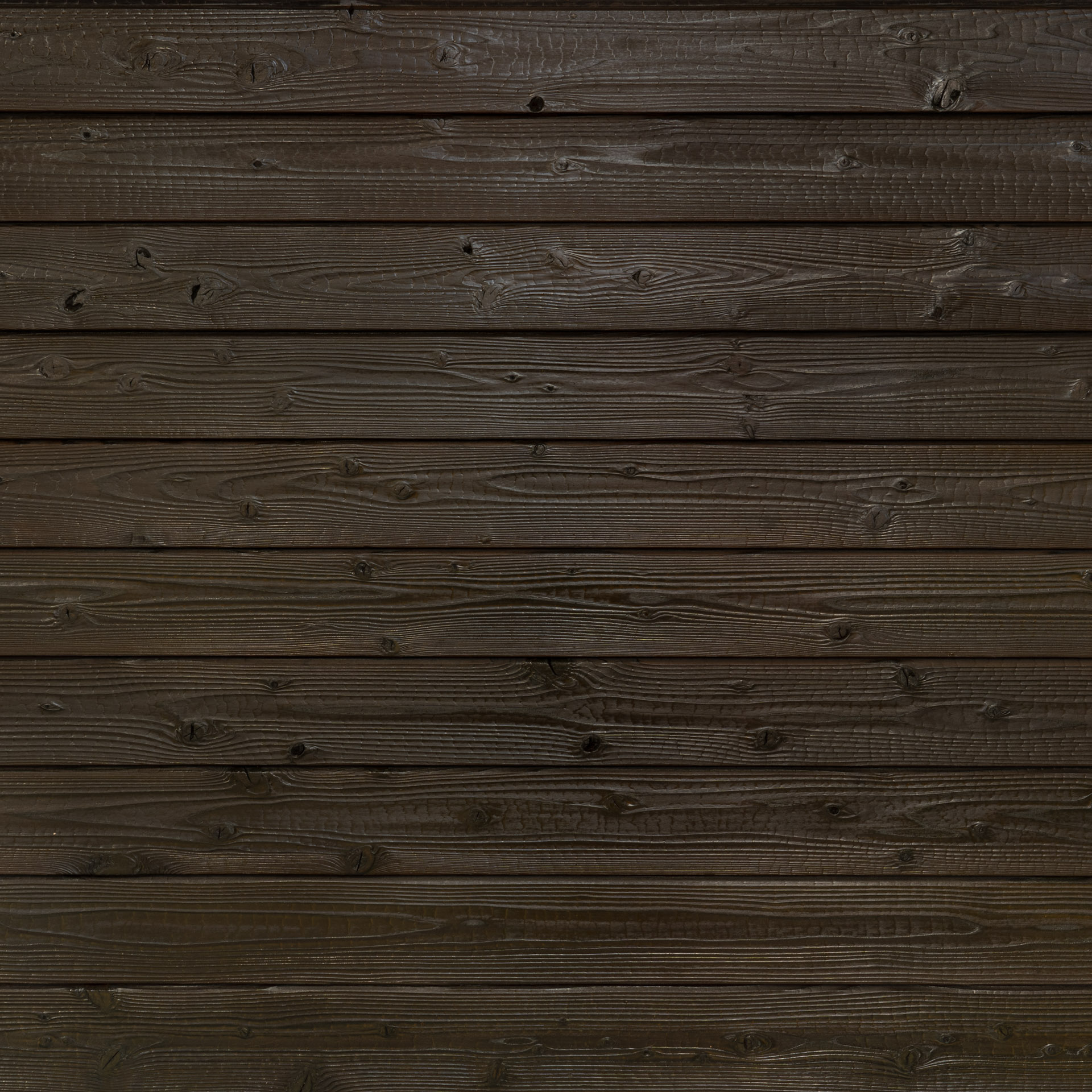
Suyaki®

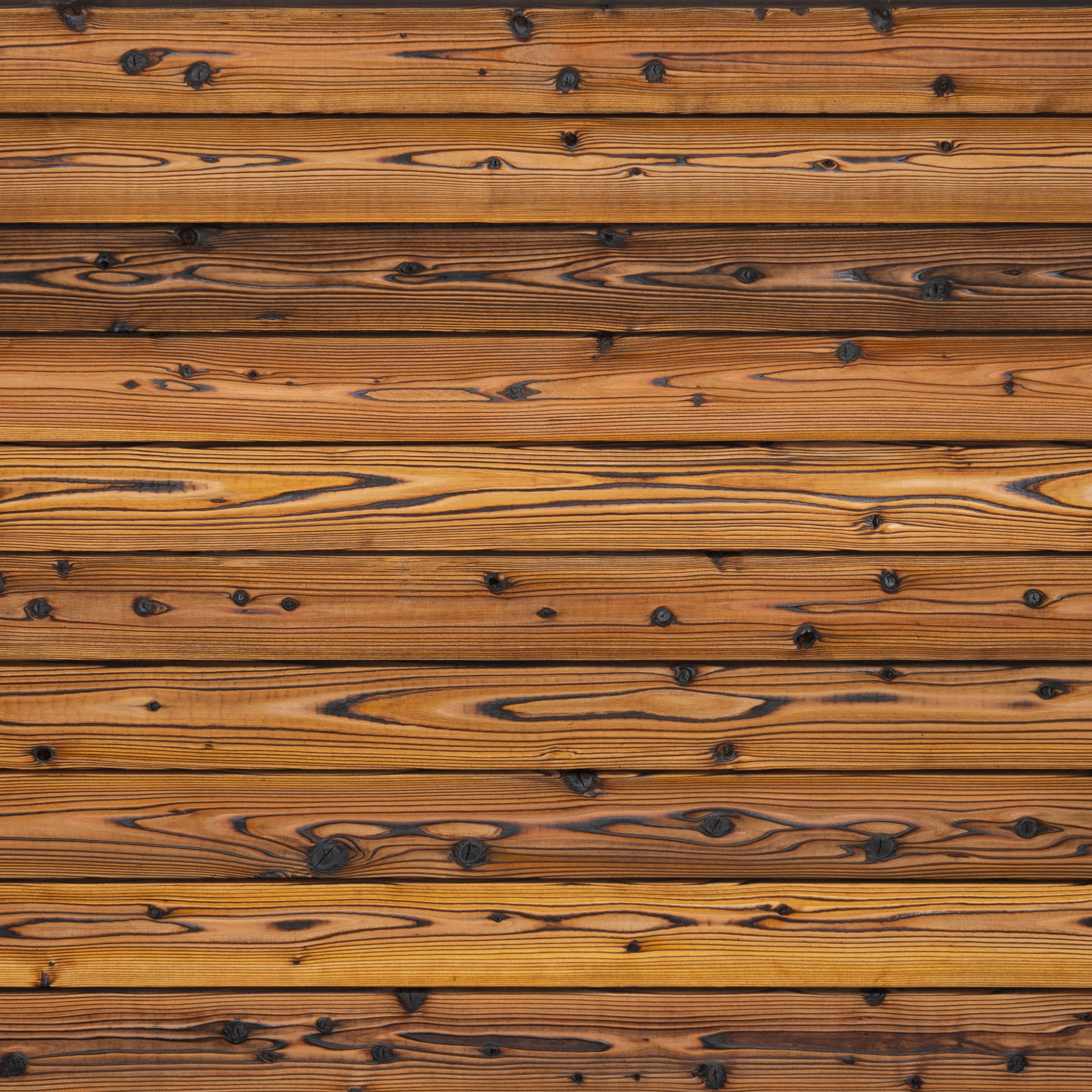
Gendai®

Pika-Pika®

Hinoki
Sugi
Suyaki®
Gendai®
Pika-Pika®
Hinoki
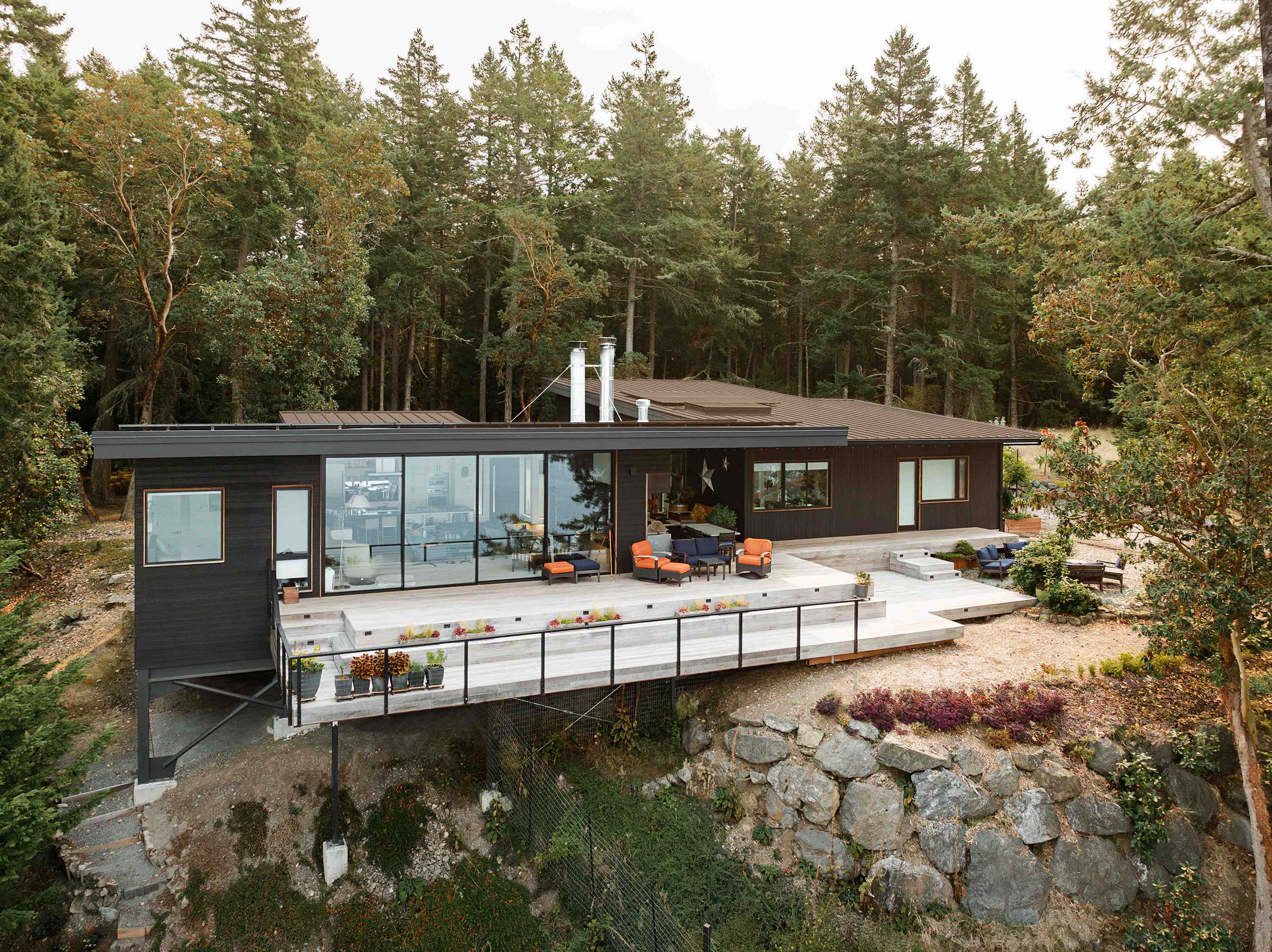
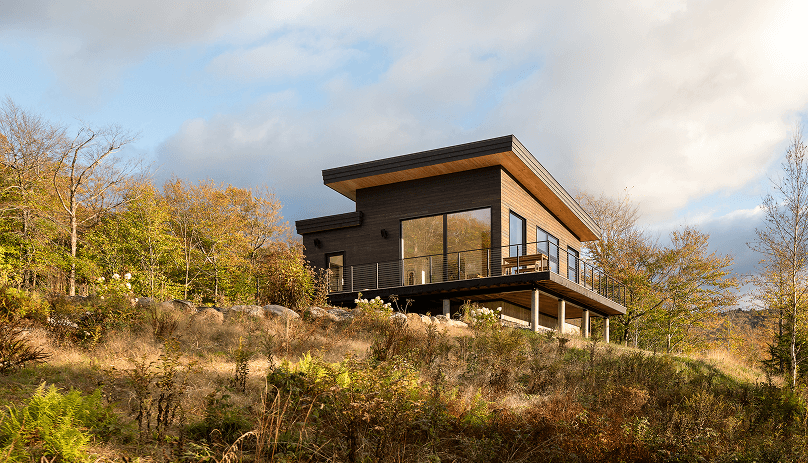

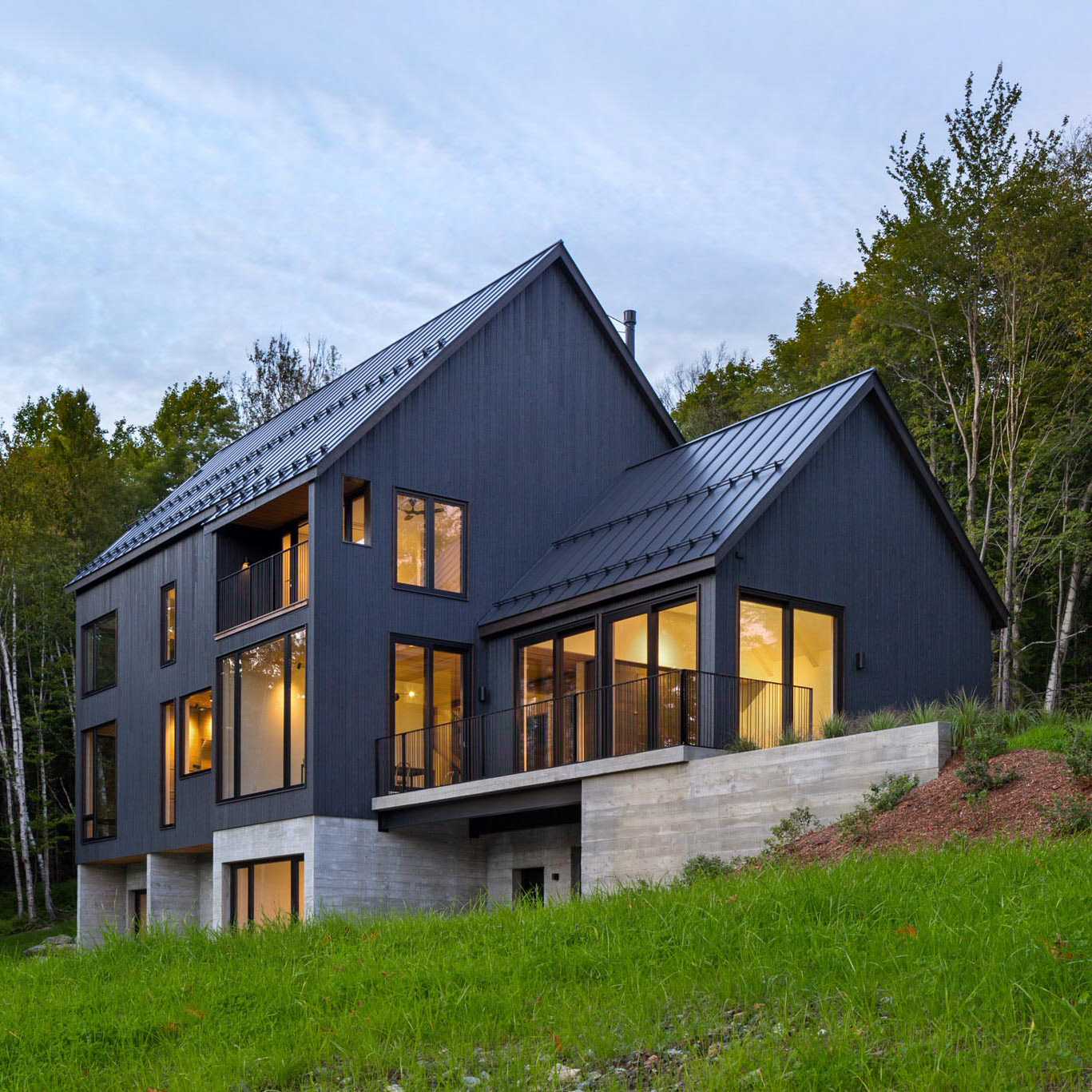
Fire took the original cabin. This one was built to stand with the land as it heals.
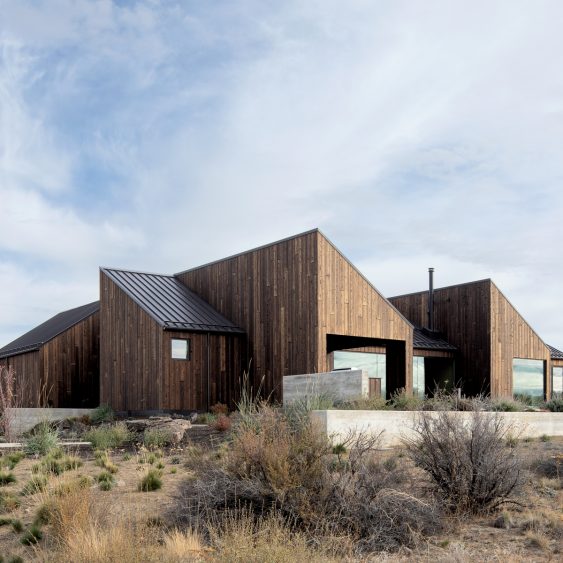
On a bluff above Oregon`s Santiam River, @skylabarchitecture reimagined a family cabin lost to the 2020 Beachie Creek Fire. Drawing from the original home`s traditional gables, the new form takes on a quieter, more contemporary silhouette, sited to feel as though it floats over the river`s edge.
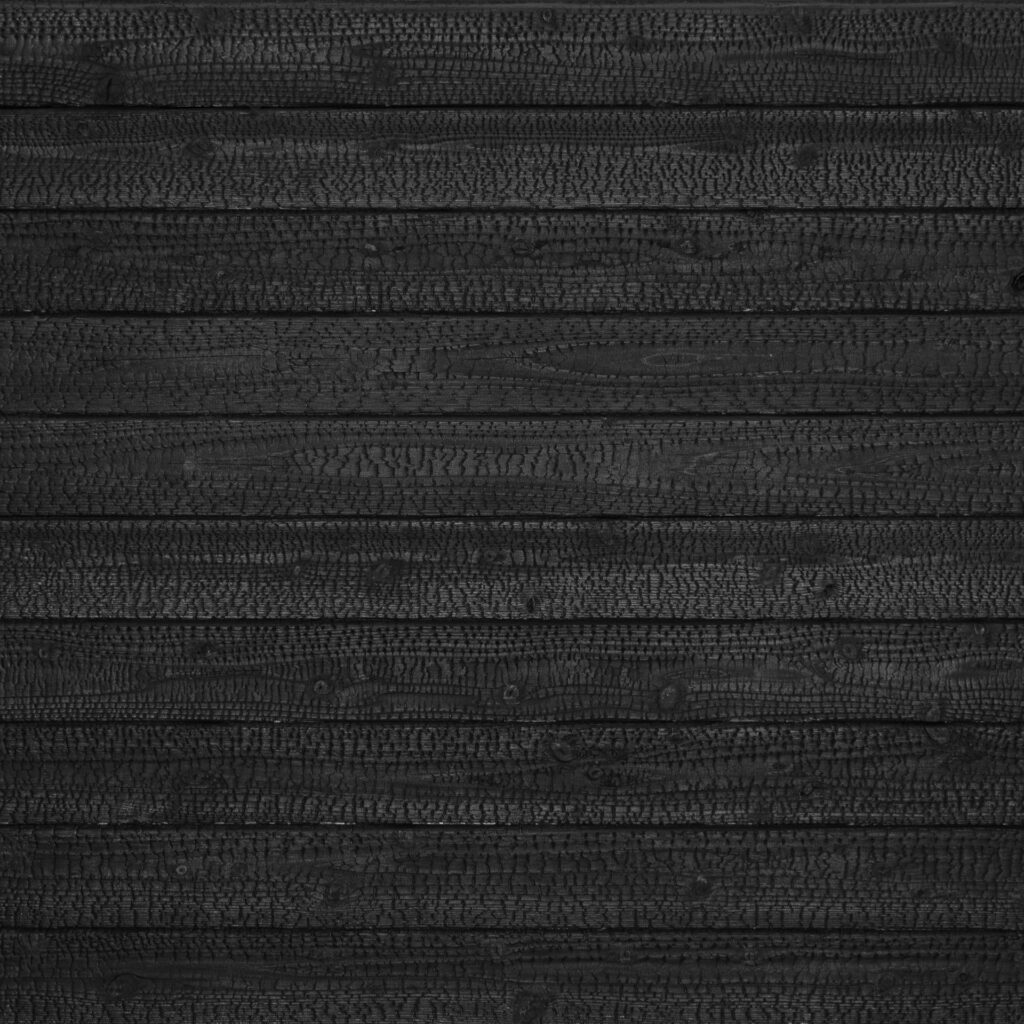
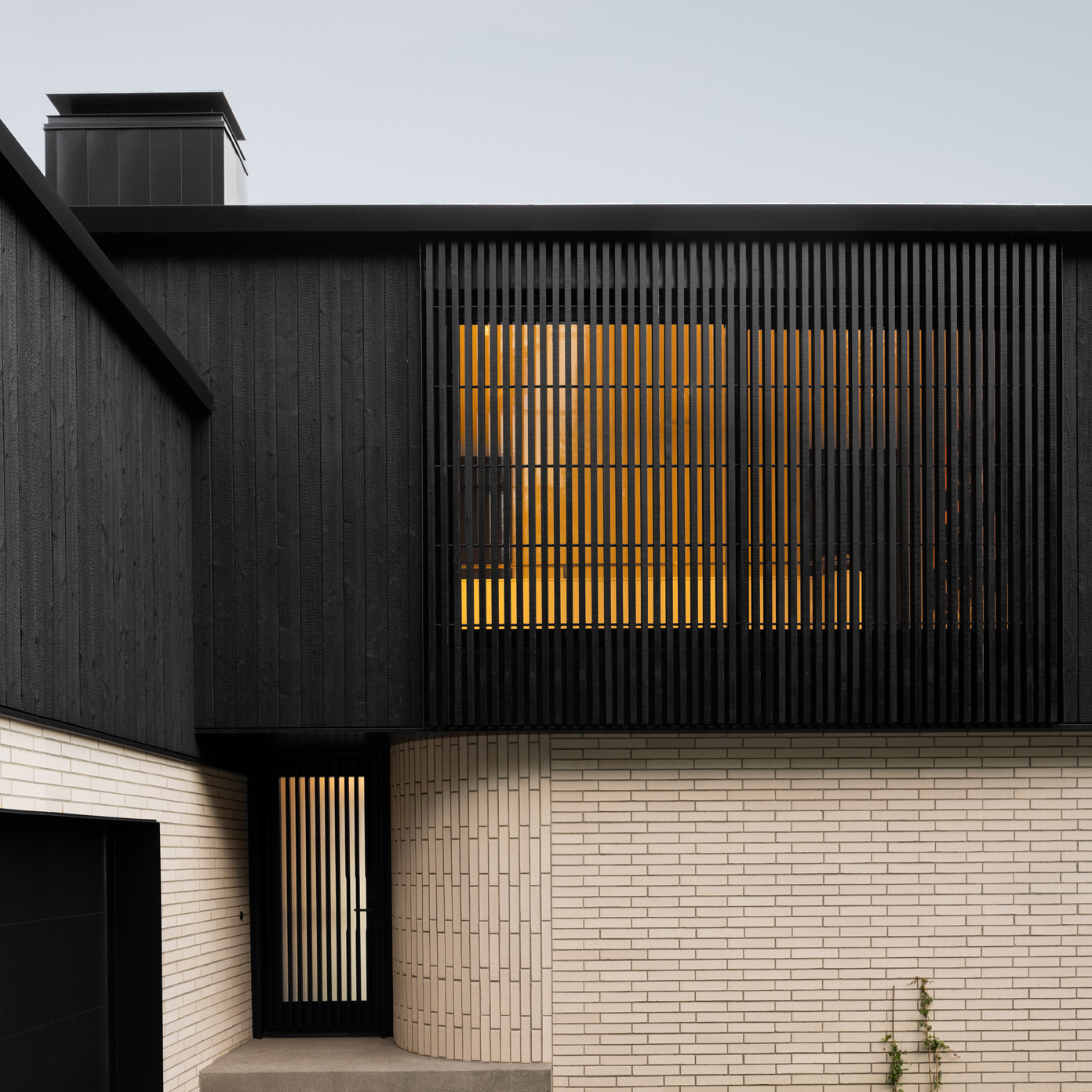
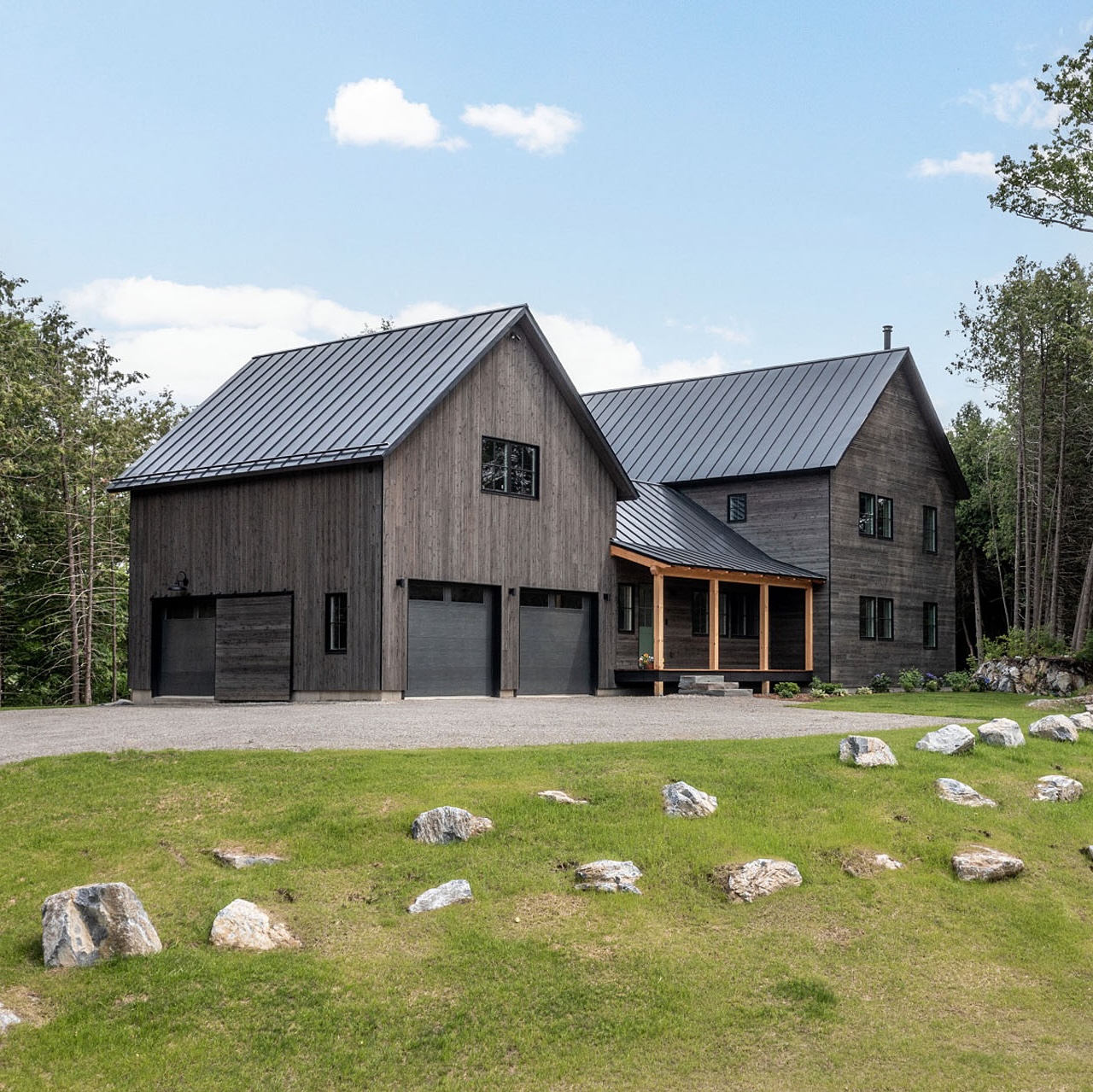
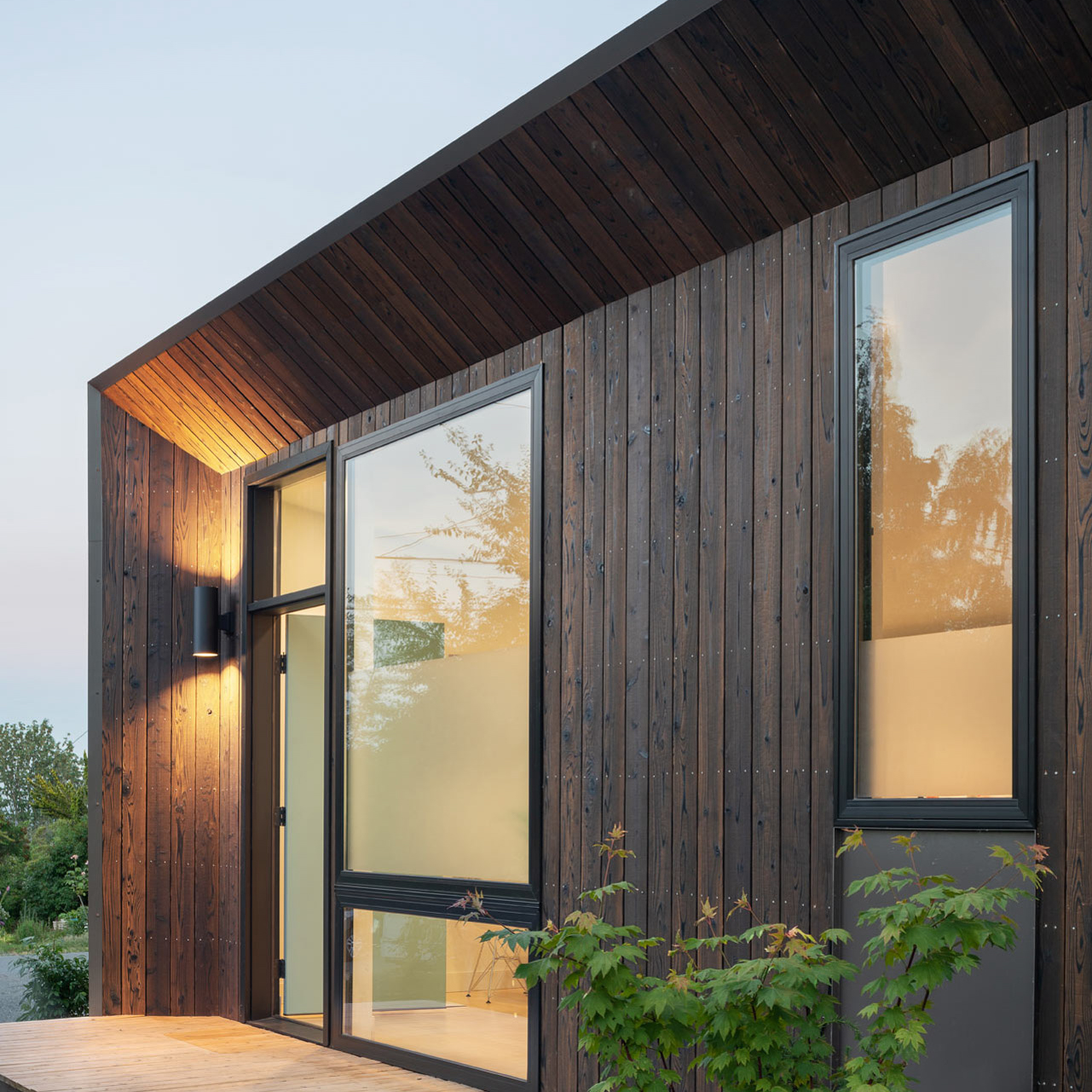
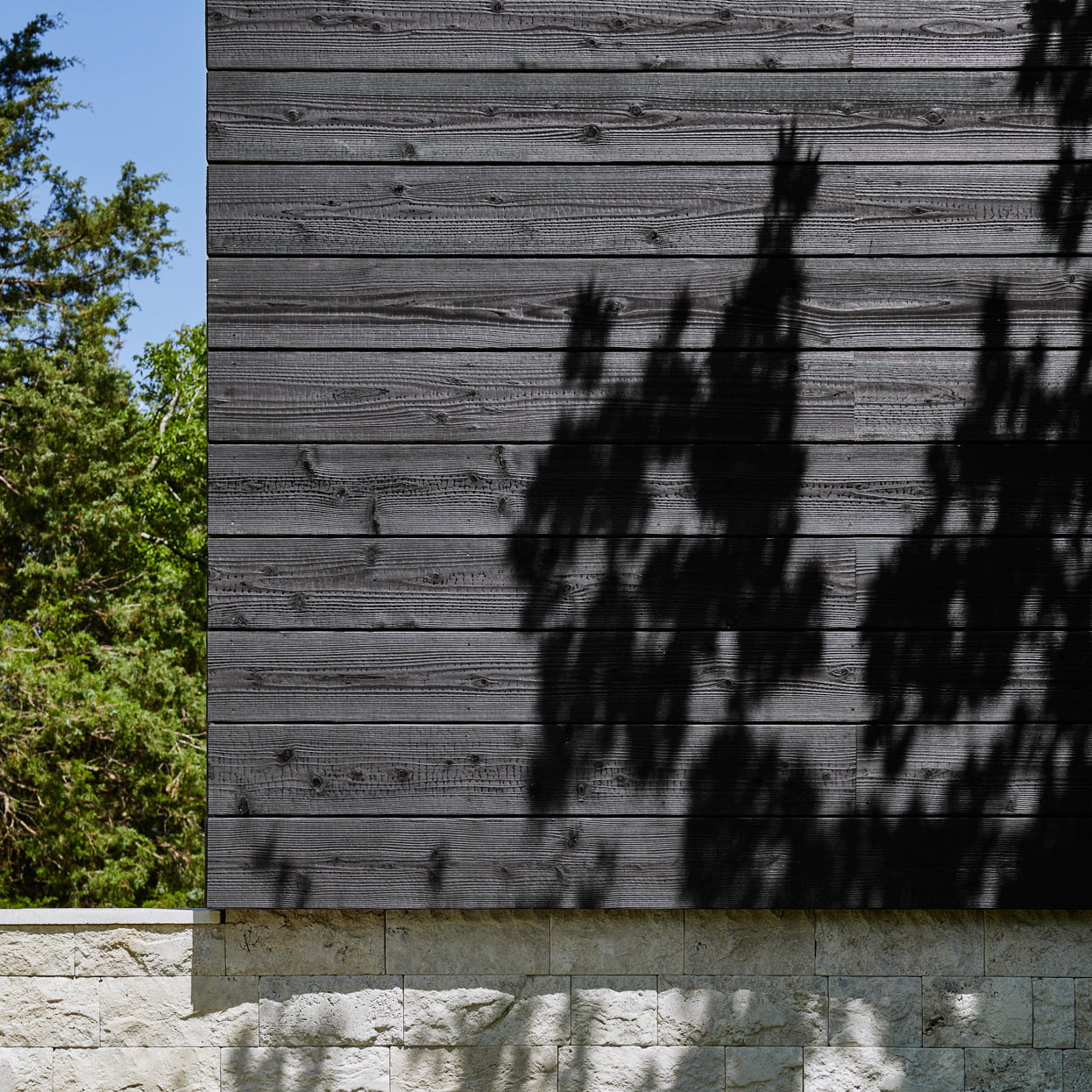
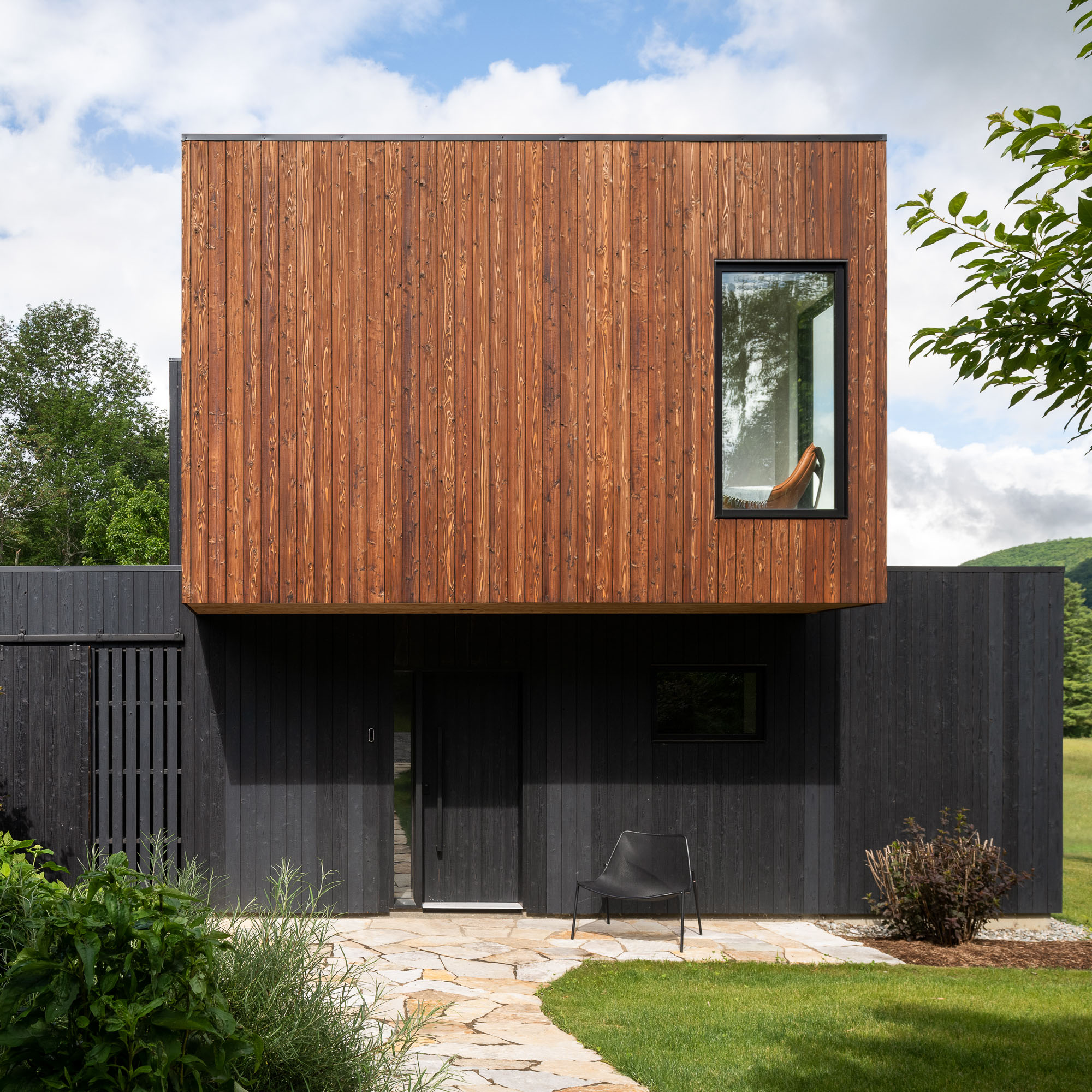
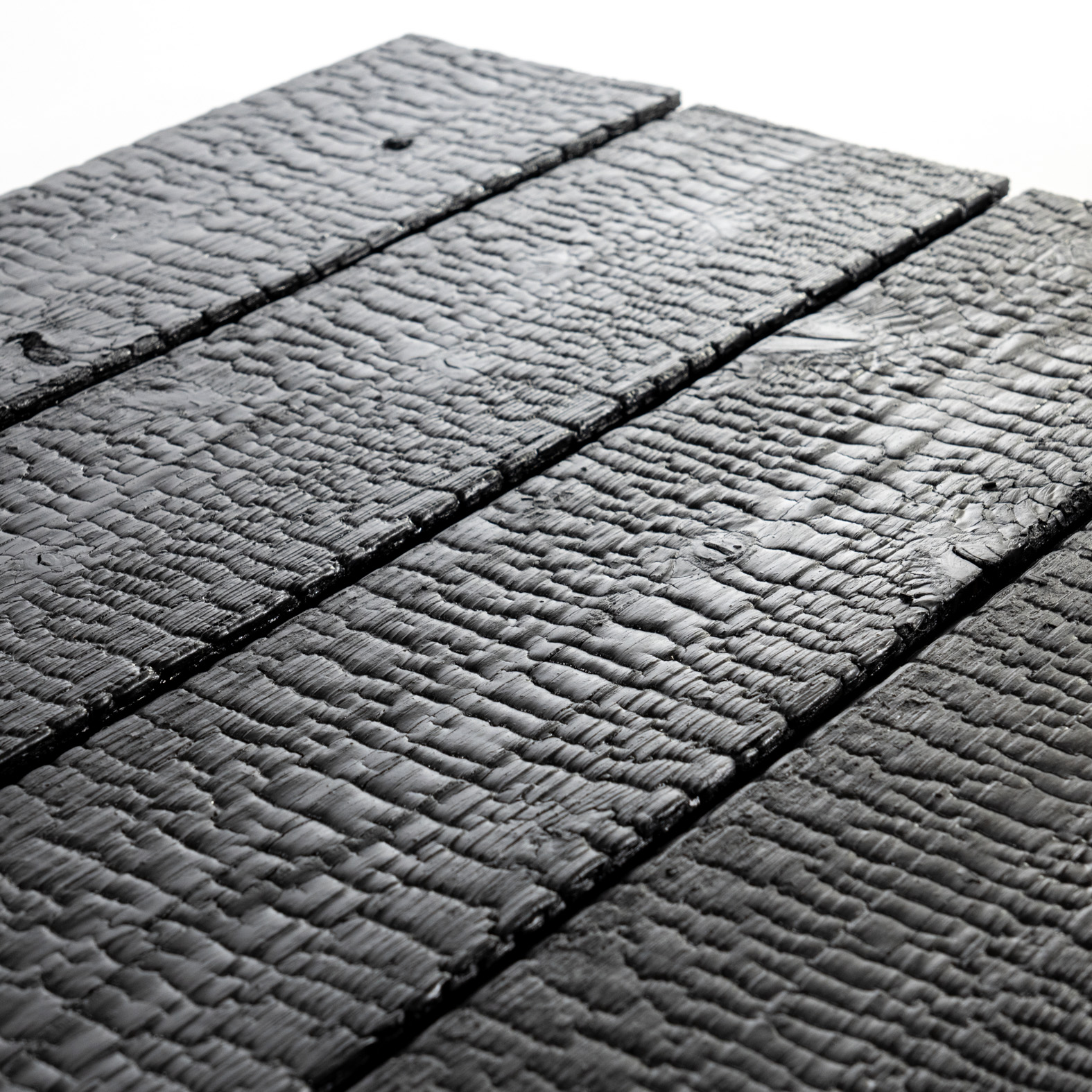
The choice to clad the home in yakisugi, or shou sugi ban, was strategic as well as visual. @nakamotoforestry`s Suyaki® siding was chosen: the most traditional yakisugi variation they offer, which leaves soot from the charring process completely intact.
That richly textured surface serves as a beautiful contrast to the aluminum-clad windows and metal roof, while providing flame and spark resiliency.
The dark siding lets the house recede into the regenerating landscape, while inside, pale mass plywood by @freresengineeredwood opens up to evoke the imagery of peeling back a charred log.
Read the full story of this home on @dwellmagazine at the link in our bio.
Architect: @skylabarchitecture
Cladding: Suyaki® Tung Oil Black
Builder: @kaufmanhomesinc
Carpentry: @carpentryplusinc
Photographer: @jeremybittermann


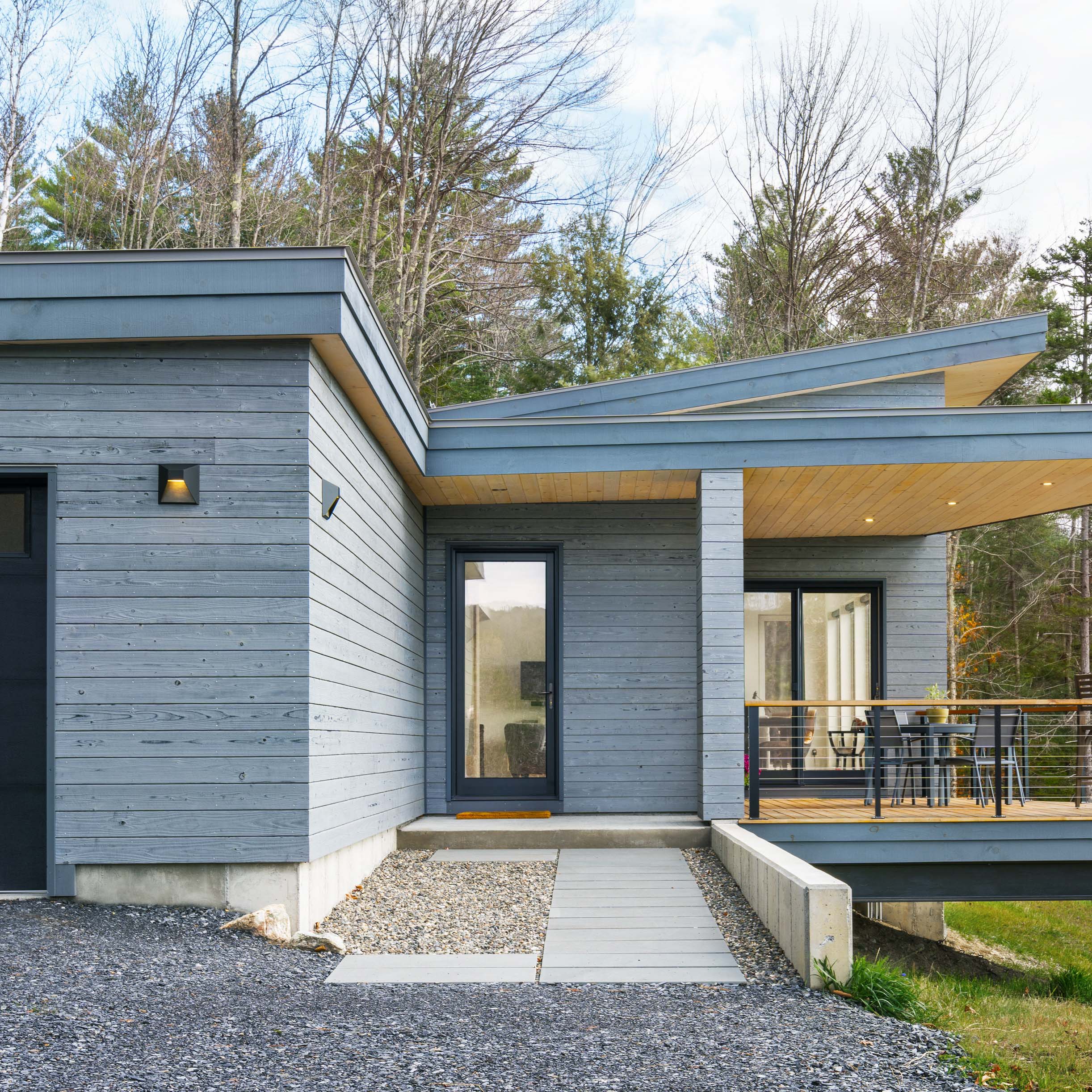
Great civic architecture demands materials that stand the test of time. Our natural wood siding delivers.
Our unburned sugi wood, scene in slides 1 & 2, provides clean, material honesty, while our burned sugi options (also known as yakisugi), scene on slides 3-6, bring warmth and texture. Both will weather decades of foot traffic and open sky without losing an ounce of character.
Featured Projects:
1-2. Boat Race. Architect: @kkaa_official, Photographer: @kkaa_official
3-4. Kure City Civic Center. Designer: @kkaa_official, Builder: Konoike Construction
5-6. Gladys Valley Marine Studies Building. Designer: @integrusarchitecture, Builder: @andersen.construction

Off-grid cabin or golf getaway in the mountains? No wrong answers, especially when they’re all clad in the yakisugi of your dreams.
Featured Projects:
1-2. Snowpeak Campfield. Photography: @arthurhitchcock, Architect: @efaarchitect, Builder: Helligso Construction
3. Rivendell Cabin. Design/Build: @denoutdoors
4. Hidden Cliff House. Contractor: Elemental Building Solutions
5. Seattle Lakehouse. Photographer: @rafaelsoldiphotography, Architect: @shedarchitecture, Builder: Whelbilt Homes
6. Tumble Creek Clubhouse. Architect: @harthowerton, Builder: @bayley_construction, Photographer: @yehphotography
7. Gurley Lake House. Architect: TrueLinea Architects, Builder: Trifecta Construction LLC, Photographer: @whitphotography

High above Los Angeles’s Studio City neighborhood, a striking modern silhouette merges emerges from a rugged hillside.
Designed by @koffkaphakos, the home unfolds in a series of gabled volumes that climb the slope, all clad in our charred yakisugi.
Floor-to-ceiling glass dissolves the line between inside and out. Every room opens to a courtyard, deck, or view. Downstairs flows straight to the pool terrace and lawn, giving the expansive outdoor living space the same ease as a resort.
Featured Product: @nakamotoforestry’s Gendai® Weathering Stain Silver
Architect: @koffkaphakos
Builder: Douglas Raub Design and Development
Landscape Design: EPT Design
Photographer: @mrbarcelo

If you’re seeing this, you’re probably into architecture and design. And if you’re into architecture and design, you’ve probably noticed how much “aging in place” has entered the conversation lately.
We love seeing modern architecture embrace this philosophy of longevity. It’s exactly why we do what we do.
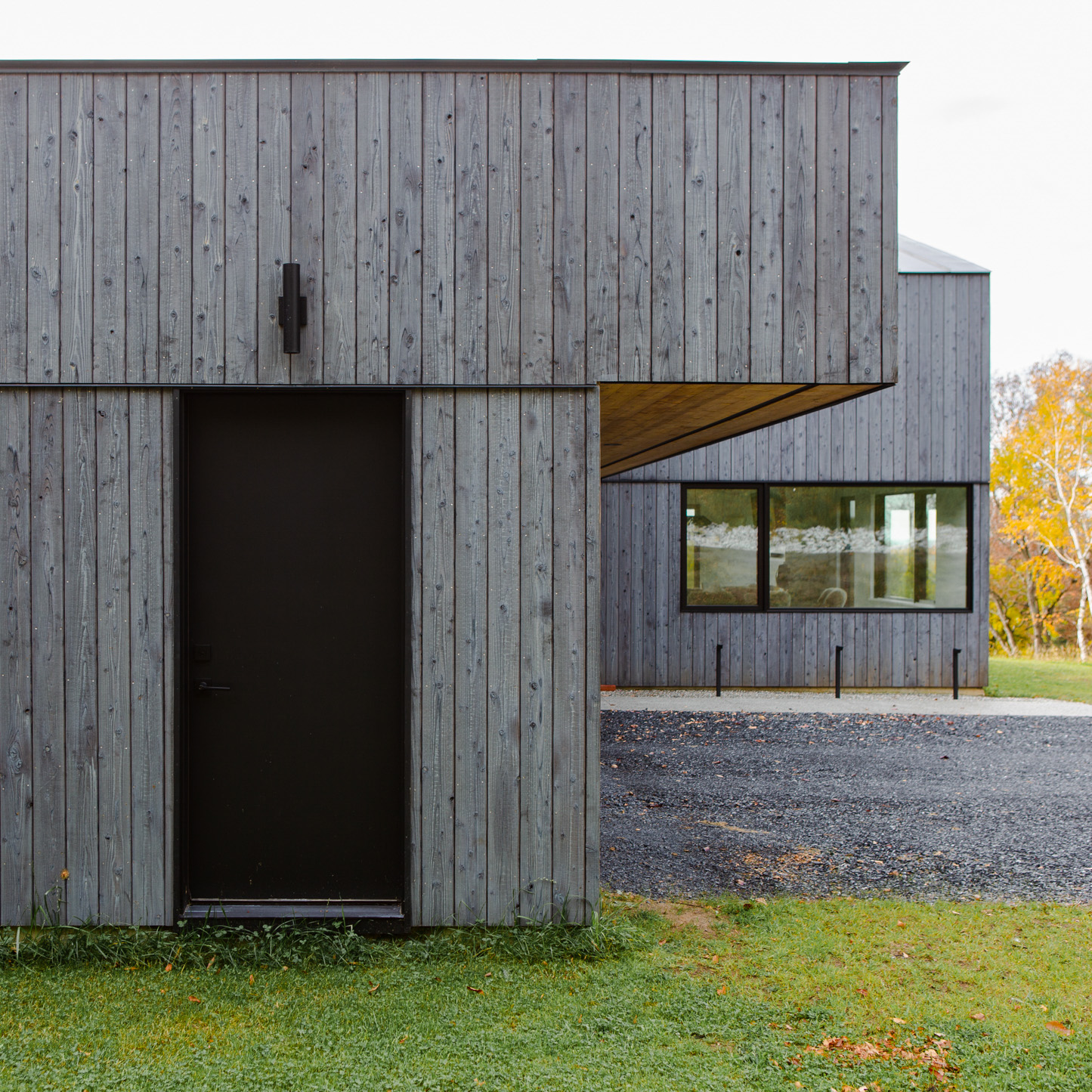
These single-story homes designed for aging in place take it a step further: clad in our charred yakisugi, a material that doesn’t just endure the years but deepens with them.
1. Fichtel Mountain House. Photographer: Johannes Zettel / @naos_am
2-4. Hill House. Architect: @kcsarchitects, Builder: Niemela Design Builders, Photographer: @ryanbentphototo
5-7. Piper’s Place. Architect: @stoeckjohn, Contractor: @careedconst
8. Avon House. Designer: Colin Koop, Builder: Schoenberg Construction
9. Avon House. Designer: Colin Koop, Builder: Schoenberg Construction, Photographer: @andrearuggphotography

In Miami’s historic Morningside district, @brillhart_architecture designed around a specimen Dade County Pine and a canopy of mature oaks.
The result was a fractured plan: four buildings across a 4,100 sf courtyard complex, linked by glass passageways and open-air bridges.
The steel structure’s narrow footings and cantilevered walls protect the delicate root systems below, creating an illusion of a home that floats above the ground.
Pulling cues from Tropical Modernism, the design looks to climate, site, and material to lead every decision.
Read the @thelocalproject feature via the link in bio.
Architect: @brillhart_architecture
Product: @nakamotoforestry Gendai® Alkyd Black
Photography: @joefletcherphoto

Nothing quite like an outdoor rinse after a long summer day, especially when the shower is made of yakisugi 🚿
Featured Projects:
1. East Hampton Modern. Architect: @workshopapd, Builder: @shoshibuilders, Photographer: @readmckendree / @jbsa.images
2. Split Gable House. Architect: @kcsarchitects, Photographer: @morgan_karanasios
3. Mountain Pool House. Architect: @eh_architect and @redhousebuilding, Photographer: @ryanbentphoto
4. Lawrence Road. Architect: @loveadventuresdahlonega, @caleblebourgeois
5. Offset House. Architect: @eh_architect, Builder: @redhousebuilding

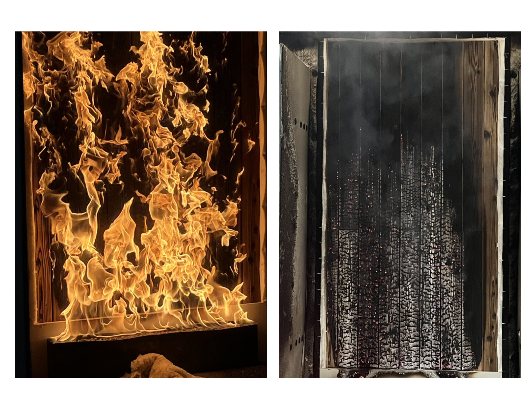
You know what else brings the heat? Our yakisugi manufacturing process. 🔥
Over the past 50 years, we`ve refined every step, from flame temperature and burn time to board thickness, to transform natural sugi wood into a cladding material with exceptional durability without chemical engineering.
It`s a science.
Head to the link in our bio to learn more about what makes authentic yakisugi and why the manufacturing process matters.
